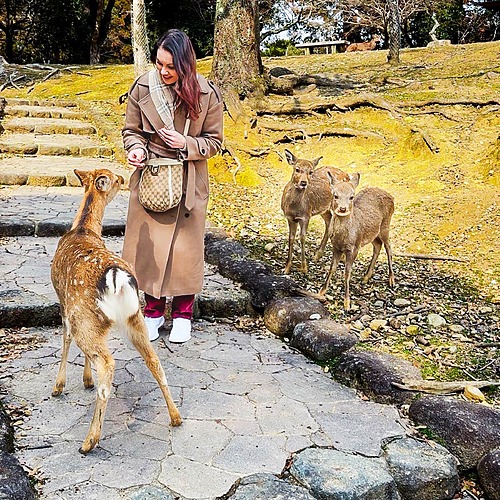
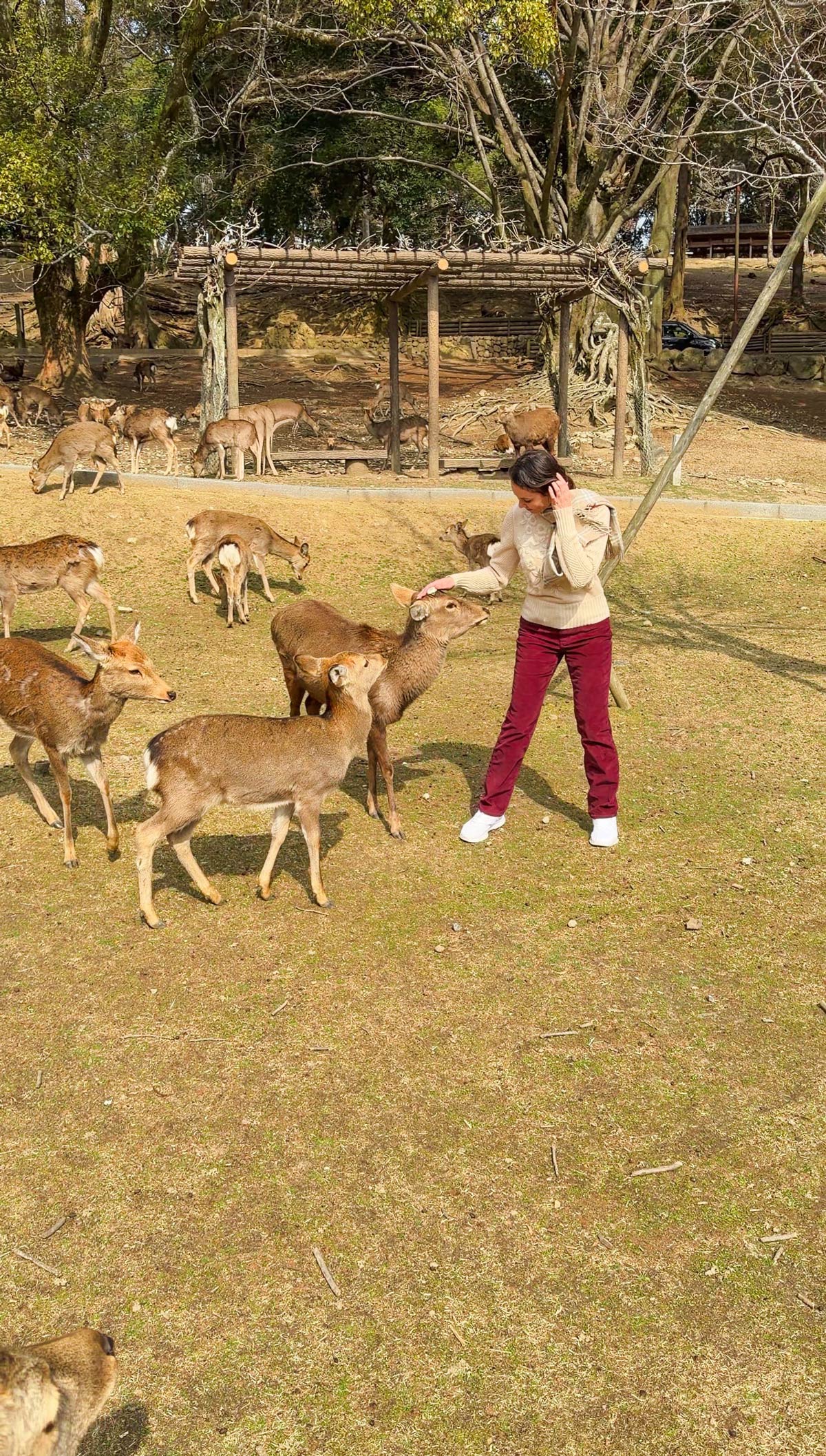
If you're planning a visit to Nara Park, knowing a few key Nara deer tips before you arrive can completely transform your experience. One of my most unforgettable moments in Japan happened not inside a temple or at the top of a mountain. It happened in a park, surrounded by wild deer calmly bowing at my feet. Nara Park is unlike anywhere else in the world, and if you're an animal lover, it will genuinely take your breath away.
If this is your first visit to Japan, don't miss this Essential Japan Travel Checklist to make your planning easier before you go!
That said, it can also catch you off guard. Having grown up with dogs and spent years studying animal behavior and clicker training, I noticed things at Nara Park that most tourists miss entirely, and it made all the difference in how I experienced it. I watched people get chased, nipped at, and flustered. It was clear that most of them had no idea why it was happening or what to do about it. That's exactly why I wrote this guide.
In this guide, I’m sharing simple, experience-based Nara deer tips, along with practical Nara Japan travel tips to help you feel more confident, safe, and fully present for one of Japan's most magical experiences.
Nara Deer Tips at a Glance
If you want to enjoy your visit to Nara Park without getting overwhelmed, keep these tips in mind:
- Walk deeper into the park for calmer deer
- Keep your deer crackers in a bag
- Signal when you're done feeding
- Don't Run
- Feed the females
Why the Nara Deer Behave the Way They Do
In Nara, the sika deer are considered sacred messengers of the gods. They not only live freely among the people of Nara, but they’ve also been protected and cared for for hundreds of years. Over time, the deer in Nara have become highly conditioned to human interaction, which is why they feel so comfortable approaching visitors in the park.
Why the Deer Bow to Visitors
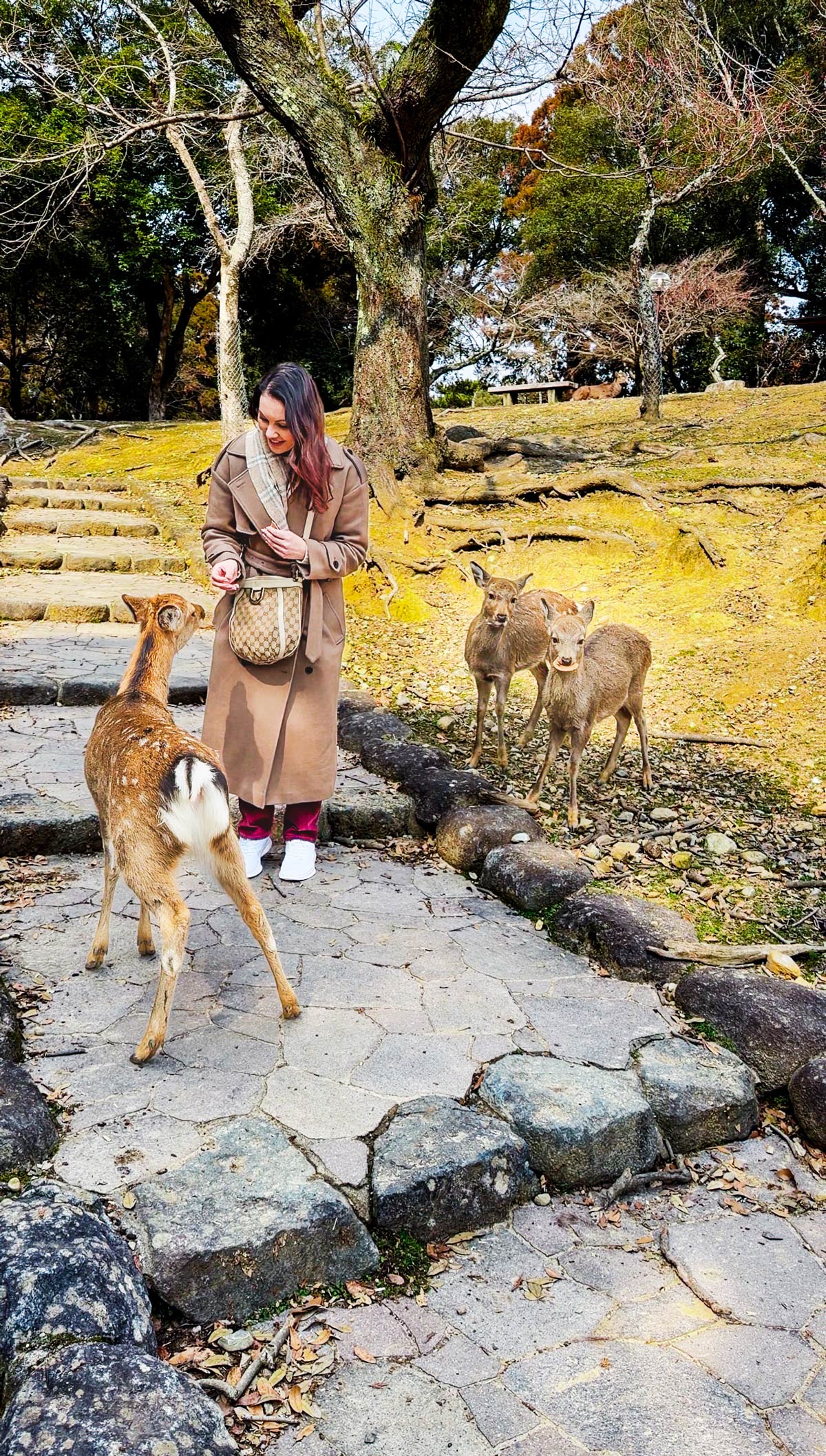
One of the most charming interactions, feeding deer at Nara Park, is watching them bow for crackers. In the same way you might teach a dog to sit before receiving a treat, the deer in Nara have learned that bowing leads to a reward. When I lift my hand, it signals to my dog to sit without even needing a verbal command—many animals actually respond more quickly to visual cues and sounds, which is why clicker training is so effective. In Nara, when you bow, the deer often bow back, having learned this behavior through repetition and reward. Many will even approach you and begin bowing before you’ve had a chance to respond.
How the Deer Associate People with Food
The deer crackers sold throughout Nara Park, called shika senbei, are specially formulated for the sika deer and make up a significant portion of their diet. While they still forage for things like acorns in the wild, these crackers are a primary source of nutrition. Through that consistent association, the deer have been conditioned to connect people with food, and as any animal trainer will tell you, food is one of the most powerful tools for building trust and shaping behavior.
Essential Nara Deer Tips for the Best Experience
You’ve probably seen videos of tourists being chased or nipped by deer in Nara Park. While the deer are generally safe, they are still wild animals, and most negative interactions are simply a response to how people engage with them. If it’s your first time feeding deer in Nara Park, following these essential Nara deer tips will help you have a calm, enjoyable, and much more memorable experience.
1. Walk Deeper Into the Park for Calmer Deer
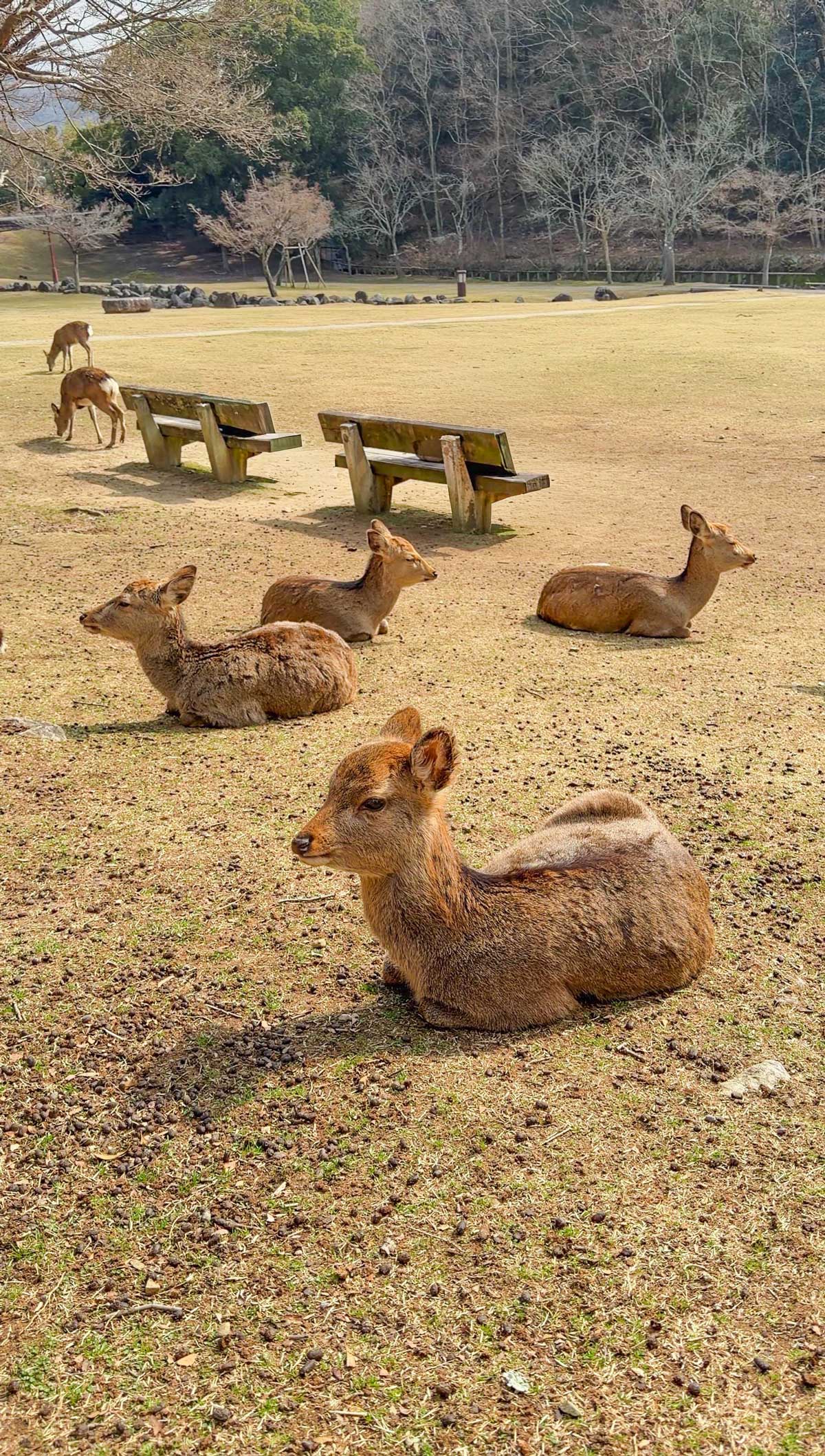
After purchasing your crackers, most visitors stay near the entrance where the deer are the most active. These deer are often overstimulated and more aggressive due to the constant flow of food. Nara Park is much larger than it first appears. I just walked about 5 minutes into the park, where I came across a small pond and benches. Even such a short walk completely changed our experience, with calmer and more relaxed deer.
2. Visit Later in the Day
The deer are most active in the morning and early afternoon when feeding is at its peak. During these times, larger groups tend to gather, which can feel overwhelming. Visiting later in the day, especially in the evening, you’ll notice the deer are more spread out and less focused on food, making interactions feel much more relaxed.
3. Keep Crackers in Your Bag
This is a small change that made a huge difference. The moment visitors started putting crackers into their pockets, I could see the deer start investigating every inch of their clothing, trying to locate them. They don't understand what a pocket is. They just know the scent is coming from somewhere on their body and will nip at whatever fabric is nearest. By keeping my crackers in a separate bag and only taking out a few at a time when I was ready to feed, I completely avoided this.
4. Signal Clearly When You’re Done Feeding
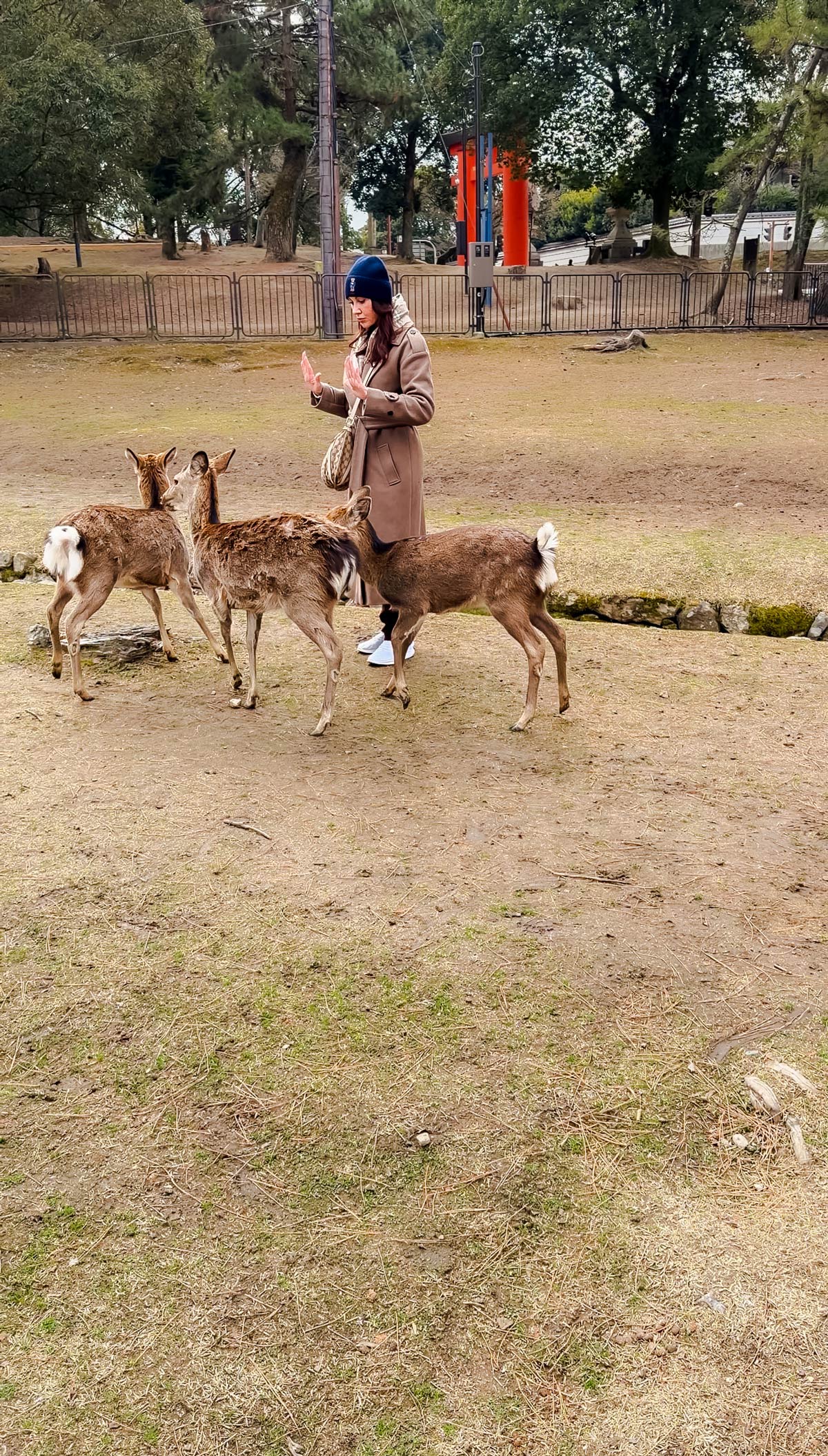
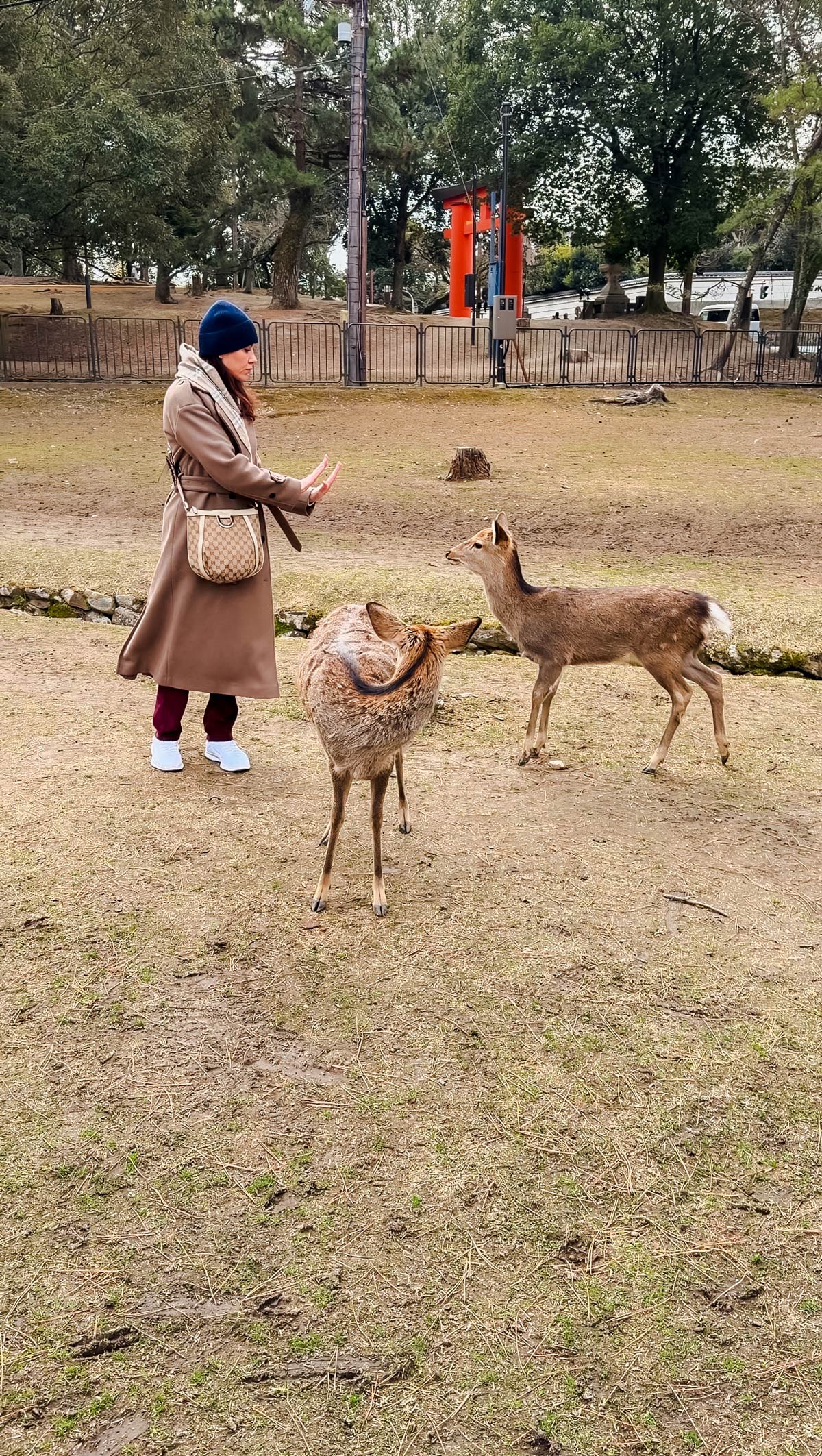
Knowing how to signal that you’re out of food is one of the most important skills when interacting with the deer. When you’re finished, raise your hands with open palms facing the deer. This clear visual cue signals that you have nothing left, and if you hold the position, you’ll often see the deer lose interest and walk away. This works remarkably because it's a signal the deer have learned to read over countless interactions with visitors.
5. Don't Run
If a deer continues to follow you, your instinct might be to run. This often triggers a chase response, which is exactly why you see tourists being pursued across the park in those viral videos. Instead, stay calm, turn back toward the deer, and reinforce your “no more food” signal with your hands. In most cases, they’ll quickly disengage. Like with many animals, calm and consistent communication is far more effective than reacting quickly.
Out of all the times I used this signal, there were only one or two times when I had a deer continue to follow me and had to repeat it.
6. Feed the Females
Female deer are generally calmer and less assertive than males, which makes them easier to interact with. Male deer, even with trimmed antlers, tend to be larger, more confident, and more likely to push boundaries. If a male approaches, use your hand signal and move on until you find a calmer deer to feed.o bigger.
Common Mistakes Made by Tourists
Here are some common mistakes I saw tourists make during my time in Nara Park.
- Taking all the crackers out at once or holding them all in your hands
- Puttings crackers in their pockets
- Running away from the deer
- Acting aggressively towards the deer
- Feeding large groups of deer at once
- Staying in the same crowded areas as other tourists
What To Do If the Deer Try To Bite At Your Clothes
It is very common for the deer to nip at your clothes if they think you have cookies in your pockets. In addition to keeping the treats in a bag and out of your pockets, here are three things you can do if they continue nipping at you.
- If they try to go to your pocket or nip your clothes, keep your hand up, palms flat, and block their head.
- Firmly say "No"! While they don't understand the word no, they understand the firm tone in your voice.
- Make a loud noise, like clapping your hands, to interrupt their behavior.
Safety & Rules for Feeding the Deer
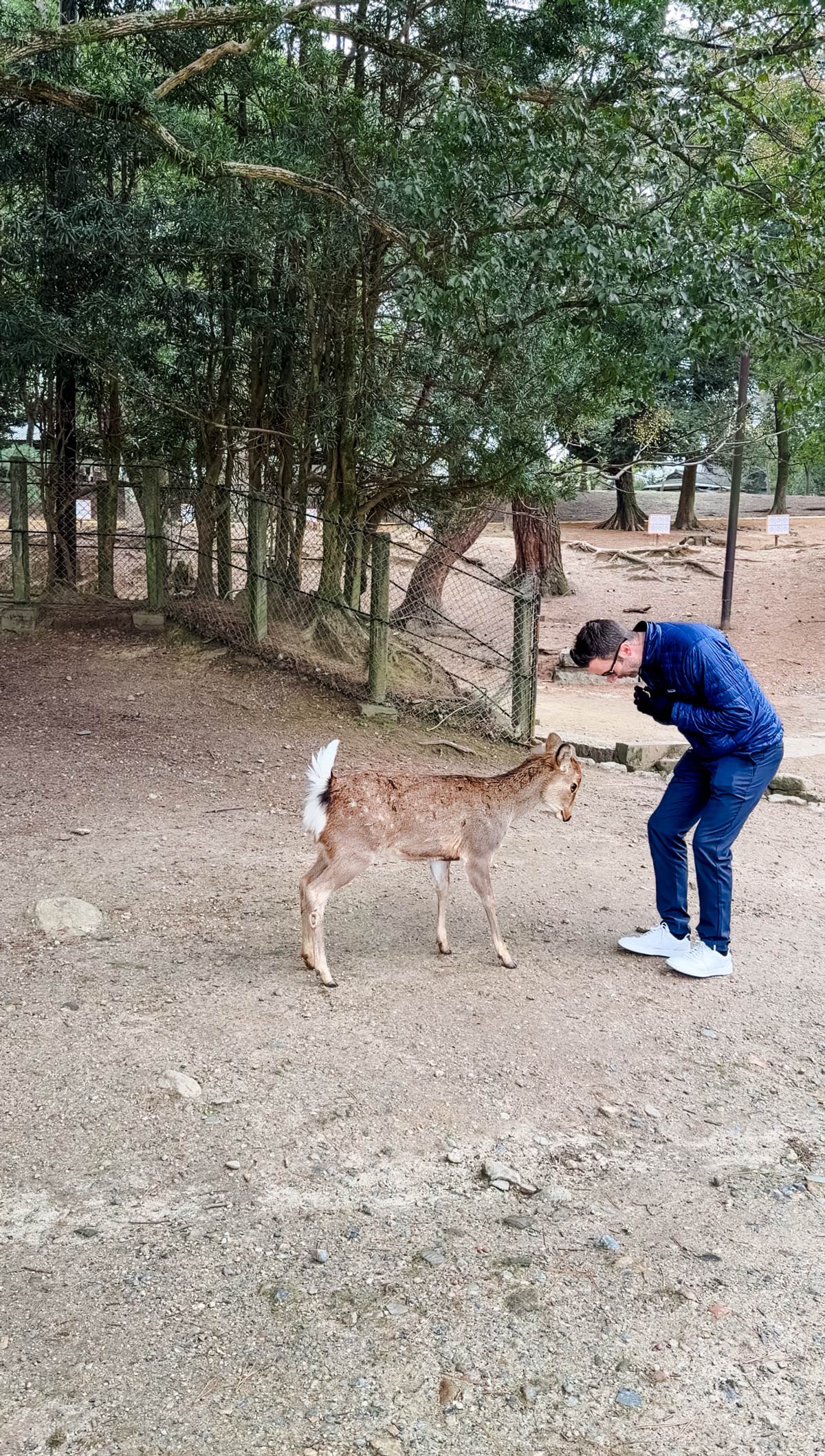
To keep both you and the deer safe, there are a few basic Nara deer etiquette guidelines to follow when visiting Nara Park.
Only Use Official Deer Crackers (Shika Senbei)
The crackers sold at Nara Park are specially made to safely support the diets of the Sika deer. They contain wheat flour and rice bran, which are easy for the deer to digest. You can buy these from vendors in packs of 10 for 200 yen. You should never feed the deer any outside food or snacks.
Do Not Physically Harm or Harass The Deer
Sadly, I have seen people try to kick the deer. While I understand it might be frustrating if a deer nips at you, these are wild animals, and it is never ok to physically hit or kick the deer in Nara. If you are feeling fearful, it might be wise to skip the feeding and just enjoy being around them.
Do Not Litter or Throw Any Trash in Nara Park
Trash and litter can kill the deer in Nara if they were to accidentally consume it. Hold your trash in your bag or pockets until it can be safely disposed of in a proper garbage.
How to Visit Nara Park
Since most travelers arrive in Kyoto via the bullet train, you'll want to check out this Tokyo to Kyoto Shinkansen guide for tips on booking and seating.
Nara Park is extremely accessible from both Kyoto and Osaka, which are popular travel destinations in Japan. I specifically planned an overnight visit to Kyoto so I could take a Nara day trip from Kyoto, which is one of the easiest and most rewarding experiences in Japan.
If you haven’t yet planned your stay, check out this Kyoto guide with quiet views and unique spots to help tailor your Japan itinerary.
Getting to Nara From Kyoto
Visiting Nara Park is one of the easiest and most popular options for a Nara day trip from Kyoto. You want to make sure you take the Kintetsu Train in Kyoto Station to the Kintetsu Nara Station. This will drop you off just a few blocks away from Nara Park, about a 5-minute walk. Do NOT take the JR train to Nara, which does not drop you off at the park.
Getting to Nara From Osaka
From Osaka, you are going to take the Kintetsu Namba Station Train, which will also drop you off at the Nara Station, only a few blocks from the Park.
The train from both Osaka and Kyoto to Nara Park takes only 34 minutes, making it the perfect day trip from either location.
Other Temples and Attractions in Nara, Japan
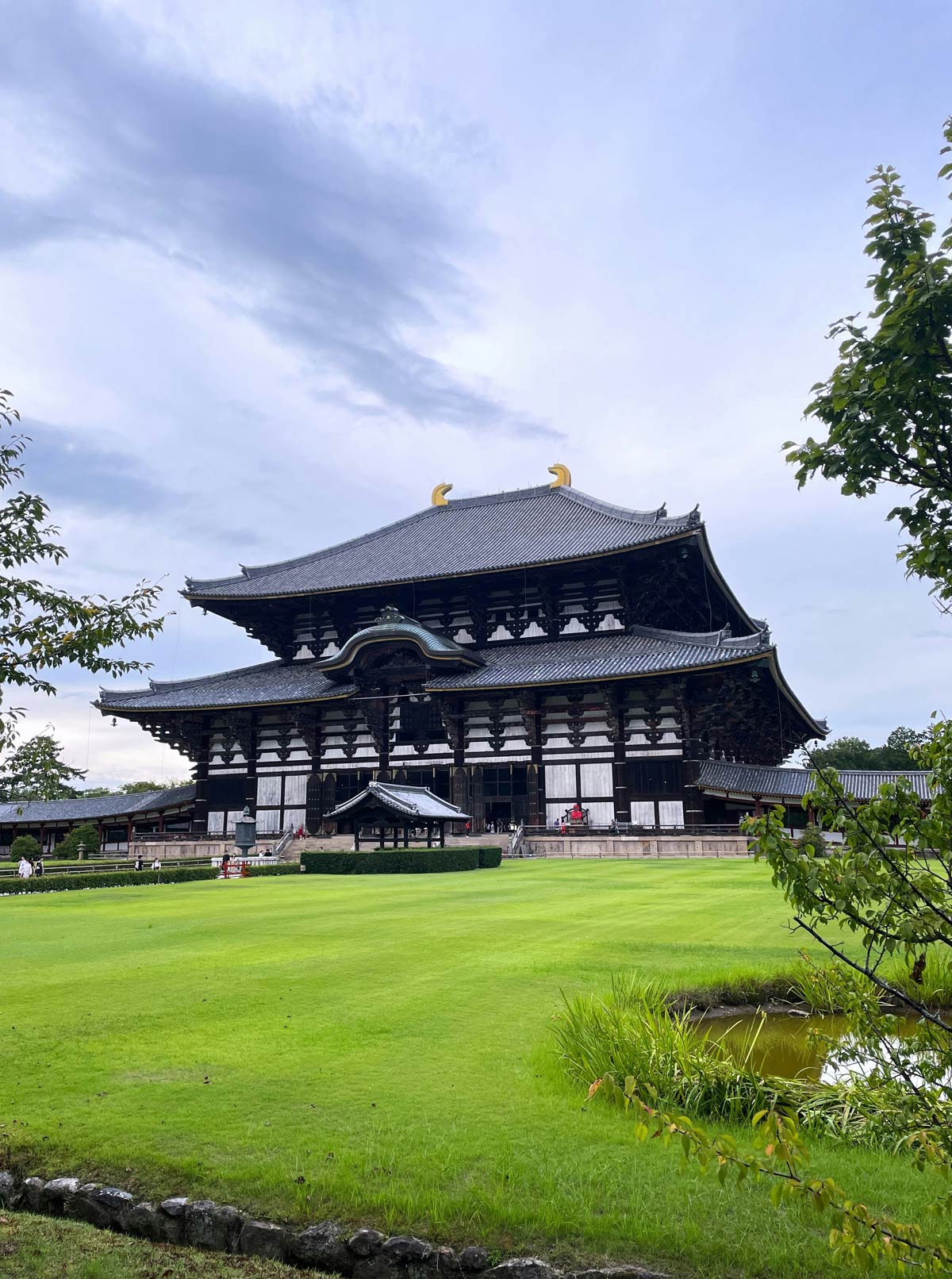
There’s much more to explore in Nara beyond the deer. Many of the city’s most famous temples and shrines are located within or near Nara Park, making it easy to combine sightseeing with deer encounters as you explore deeper into the area.
Kasuga Taisha Shrine
Kasuga Taisha Shrine is one of Nara’s most iconic Shinto shrines, known for its hundreds of stone lanterns. As you walk the paths leading to the shrine, you’ll often encounter quieter areas with fewer deer, perfect for a more relaxed interaction.
Todaiji Temple
A UNESCO World Heritage Site and home to Japan's largest bronze Buddha, Todaiji is the crown jewel of any Nara itinerary. The surrounding gardens and museums are worth plenty of time on their own, so plan to spend at least an hour here.
Kohfukuji Temple
Another World Heritage Site, Kohfukuji's five-story pagoda is one of Nara's most iconic images and the second-tallest pagoda in Japan. The National Treasure Museum on site houses some of the finest Buddhist sculptures in the country, including the celebrated six-armed Ashura figure that genuinely stops you in your tracks.
Do the Nara deer bite?
The Nara deer can bite and nip at clothing if they think you have cookies hiding in your pockets.
Can kids feed the deer at Nara Park
Yes, kids can definitely feed the deer at Nara Park, but parents should only give one cookie at a time and never let children hold on to all the cookies. Teach kids the above rules so they understand how to interact with the deer.
Why do the deer in Nara bow?
Bowing in Japan is a common practice that has been used for centuries as a greeting. By bowing to the deer first and then giving a treat after, the deer in Nara have inadvertently become conditioned to bow to receive a cookie.
In addition to Kyoto, Nara, and Osaka, many visitors choose to explore other destinations in Japan, like Tokyo. I've also created the Ultimate 4‑Day Tokyo Itinerary for First‑Time Visitors, which can help you build the rest of your trip.
Final Thoughts on Visiting Nara Park
Spending time with the deer at Nara Park is one of those travel experiences that stays with you long after your trip to Japan is over. What makes it so special isn’t just feeding the deer, it’s learning how to interact with them in a way that feels calm, respectful, and genuinely enjoyable.
Once you understand how the deer respond to food, movement, and clear signals, everything becomes easier. Instead of feeling overwhelmed, you’re able to slow down, read their behavior, and actually enjoy the interaction.
For me, that shift made all the difference. What could have been a chaotic experience turned into one of the most memorable moments of my trip.
If you approach it with a little awareness and patience, you’ll find that visiting Nara Park isn’t just about seeing the deer, it’s about connecting with them in a way that feels surprisingly natural.
 Sondra Barker