2nd-hand luxury shopping in Tokyo and Osaka feels like the adult version of being a kid in a candy store. The number of resale shops is almost endless, and for anyone with a discerning eye, there are incredible deals on designer bags, belts, and other luxury accessories.
In this guide, I’m sharing exactly how to find the best deals, what to look for when judging condition and value, the stores worth prioritizing, and my personal Google Map you can use during your trip.
If this is your first trip to Japan, also don't miss these Essential Things to Do Before Your Trip.
At a Glance: The Luxury Resale Cheat Sheet
- Best for Variety: Shinsaibashi (Osaka) and Omotesando/Harajuku (Tokyo).
- Price Advantage: Japan’s pre-loved luxury market is often 30%–60% cheaper than US retail due to the weak Yen and tax-free incentives.
- The "Secret" Hack: Look for "Rank "AB" or "Condition B" items with minor wear or flaws that can easily be fixed- these carry massive discounts.
- Top Brands to Buy: Louis Vuitton, Gucci, Prada, Vintage Christian Dior, Fendi, and Celine have high inventory with better pricing. Brands like Chanel, Hermes, and Rolex have high inventory, more curated collections, and higher pricing.
- Best Deals: Tokyo and Osaka both have excellent resale shopping, but Osaka is usually the better place to start if your goal is price.
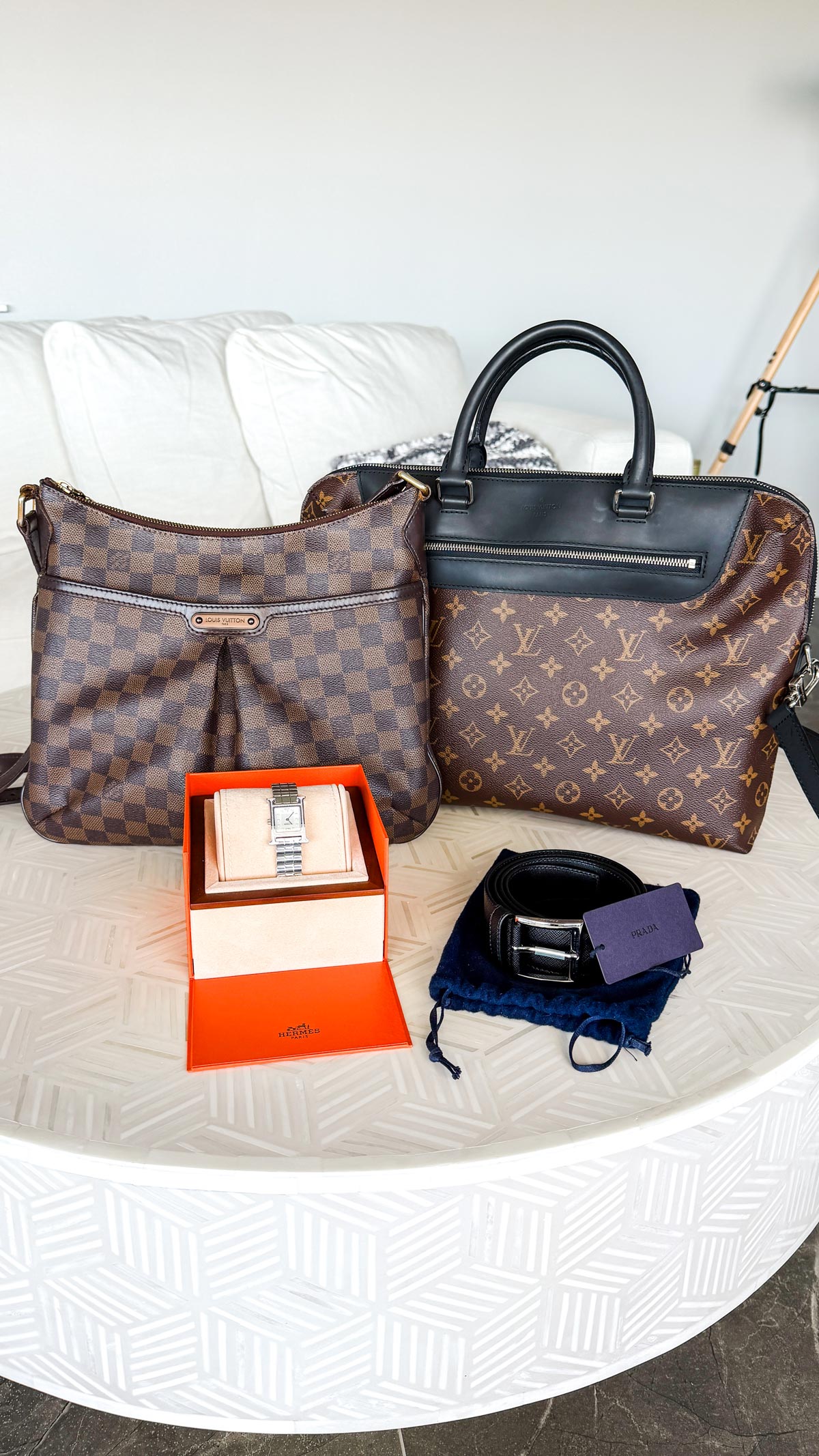
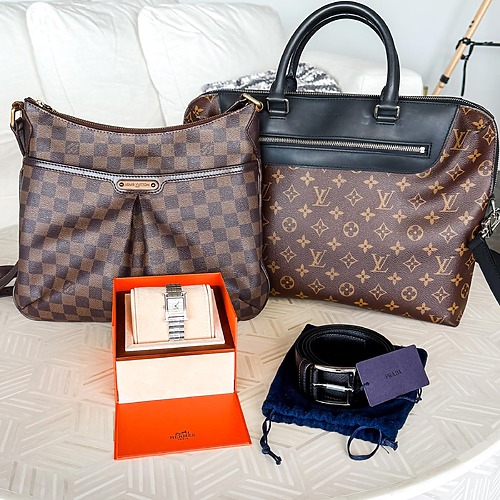
My 2nd-hand luxury shopping haul from our trip to Japan included Louis Vuitton bags, a Prada belt, and a Hermès watch.
- At a Glance: The Luxury Resale Cheat Sheet
- Are Second-Hand Luxury Bags in Japan Authentic?
- Best Areas for 2nd-Hand Luxury Shopping in Tokyo
- Best Areas for 2nd-Hand Luxury Shopping in Osaka
- 2nd-Hand Luxury Shopping in Tokyo & Osaka: Which City Has Better Deals?
- Most Reputable 2nd-Hand Luxury Stores in Tokyo and Osaka
- Japanese Handbag Condition Ratings Explained
- My Trick for Finding the Best Deals on 2nd-Hand Luxury
- Flaws You Should Avoid
- What to Check Before You Buy
- Tax-Free Shopping in Japan
- Buying From Japanese Sellers on eBay vs. Buying in Japan
- Why buying in Japan can be the better value
- When buying online still makes sense
- The Best Luxury Items to Look For In Japan
- What I Would NOT Buy in Japan
- The 2nd-Hand Luxury Bags and Accessories I Bought in Japan
- My 2nd-Hand Luxury Shopping Tokyo & Osaka Google Maps with Bookmarks
- More Japan Tips & Travel Guides
Are Second-Hand Luxury Bags in Japan Authentic?
Japan is widely considered the safest market for pre-loved luxury due to strict government regulation and a cultural focus on transparency.
The "Bag Only" Reality: Don’t be deterred if a bag lacks its original box or authenticity card. In Japan, the focus is on the physical integrity of the item. The store's legal liability is your guarantee, not the packaging.
The Police License: Every reputable reseller must hold a Kobutsu-sho (Antique Dealer License) issued by the local police. Selling counterfeits is a criminal offense that results in the immediate revocation of this license.
AACD Standards: Most major retailers belong to the Association Against Counterfeit Product Distribution (AACD). This organization uses proprietary databases and expert examiners to vet hardware, stitching, and materials.
Institutional Trust: Chains like 2nd Street, Book-Off, and Kindal have too much at stake to risk their reputation. Their business model relies on the institutional trust built through rigorous, multi-step authentication.
Best Areas for 2nd-Hand Luxury Shopping in Tokyo
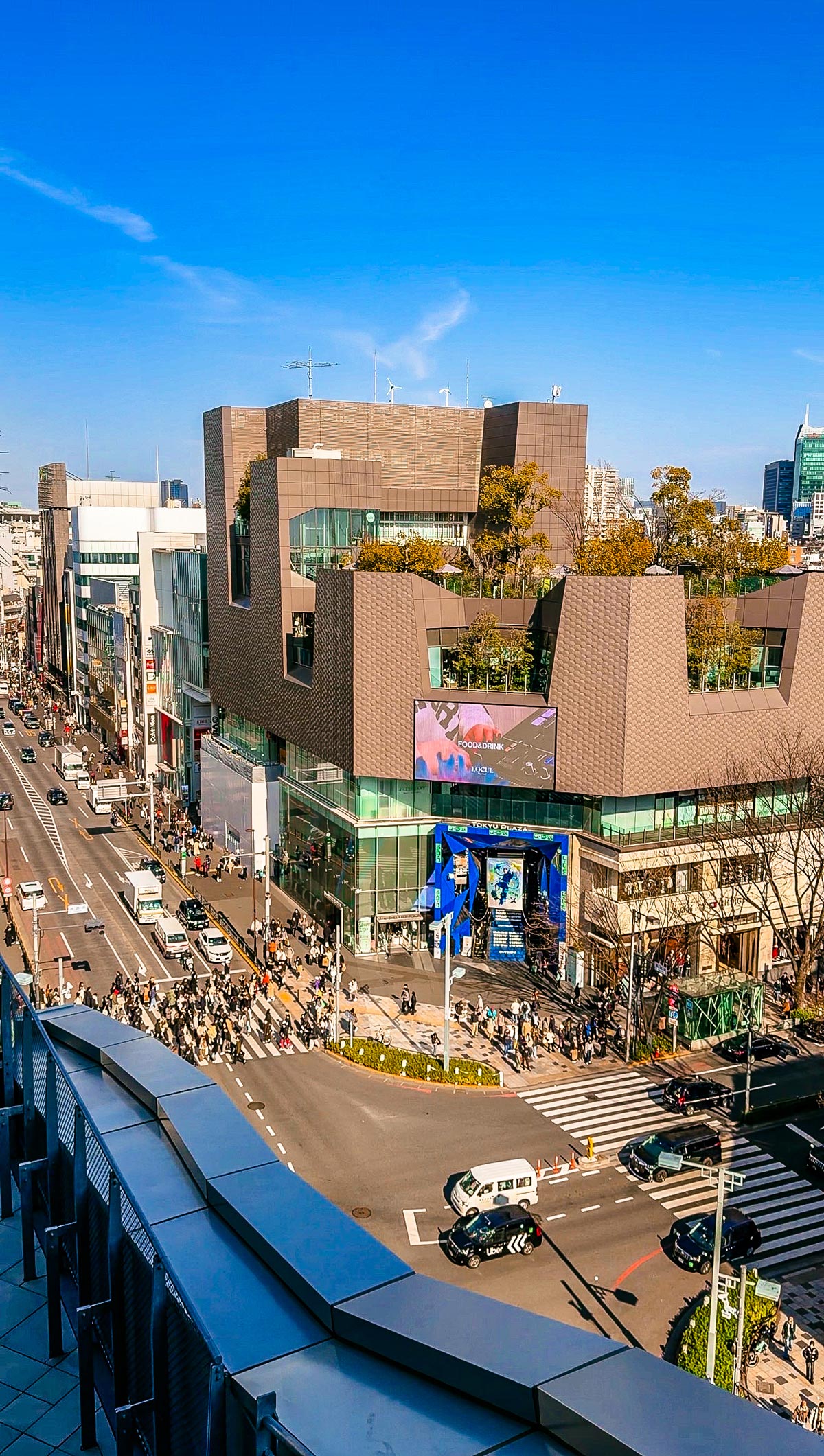
Most people visiting Japan, especially for the first time, will be visiting Tokyo. You’ll find secondhand luxury shops in every area of Tokyo, but the most popular is Cat Street in Harajuku
Cat Street in Harajuku
Right across from popular Takeshita Street, you will find Cat Street, which is lined with second-hand luxury stores.
I almost didn’t go to Cat Street because I had heard that prices were significantly higher. But on our very last morning in Tokyo, we decided to have one last lunch in the city and check out Cat Street to see if there were any more deals to be had. I was actually pleasantly surprised, and with a little digging and determination, you can still find really good deals in this area.
Other Tokyo areas worth checking
If you have more time in Tokyo, and you don’t mind taking the train to some of the less popular areas that are outside of the main wards, you'll find even better deals for secondhand luxury. However, these are often 45-minute train rides outside of areas like Shibuya and Shinjuku.
Some of these areas include:
- Chiba
- Shimokitazawa
- Ueno
- Kawasaki
Luxury 2nd Hand Stores to Avoid in Tokyo
The one area of Tokyo I would avoid if you're looking for a good deal is Ginza. The stores in Ginza will have curated collections, and they will be just as expensive as buying in the US.
Here are some better things to do in Ginza instead!
Best Areas for 2nd-Hand Luxury Shopping in Osaka
Osaka is really the Mecca of secondhand luxury shopping in Japan. There are so many 2nd-hand stores you could easily spend over four hours shopping, which is exactly what we did!
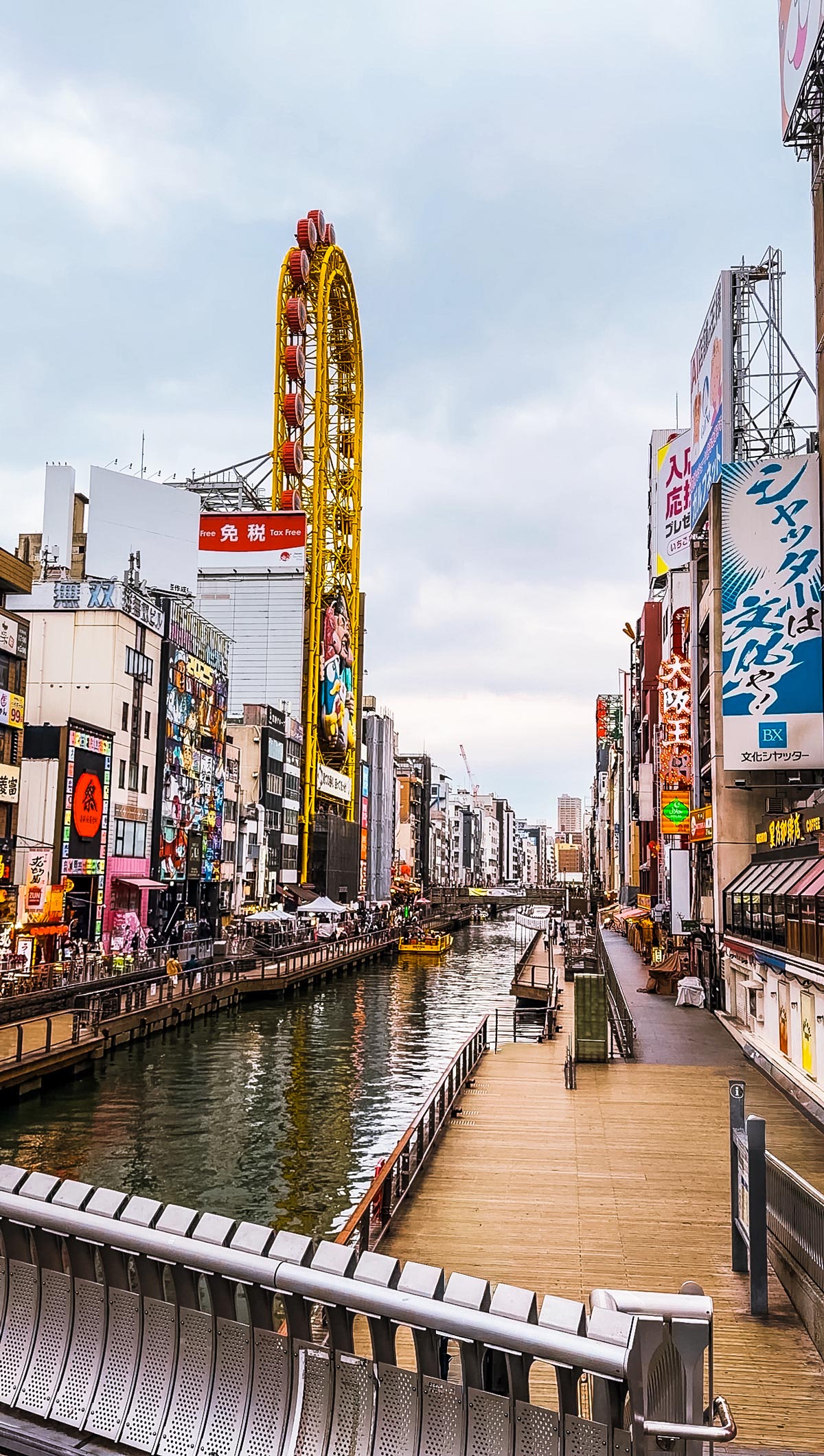
Dotonbori
Dotonbori is the most obvious place t,o start because it is the most central and the easiest to find. It is a long, crowded stretch of restaurants, shops, signage, and constant foot traffic, and every few steps there seems to be another second-hand luxury store.
You will find a mix here. Some stores have strong pricing, while others feel more curated and noticeably more expensive. As a general rule, the shops that look less like immaculate showrooms are often where the better deals begin. The pristine, museum-like stores usually have beautiful inventory, but you are paying for that polish.
Other Osaka areas worth checking
At the bottom of this article, you’ll find my Google maps with all of my bookmarks to all the different secondhand luxury stores in Osaka and Tokyo.
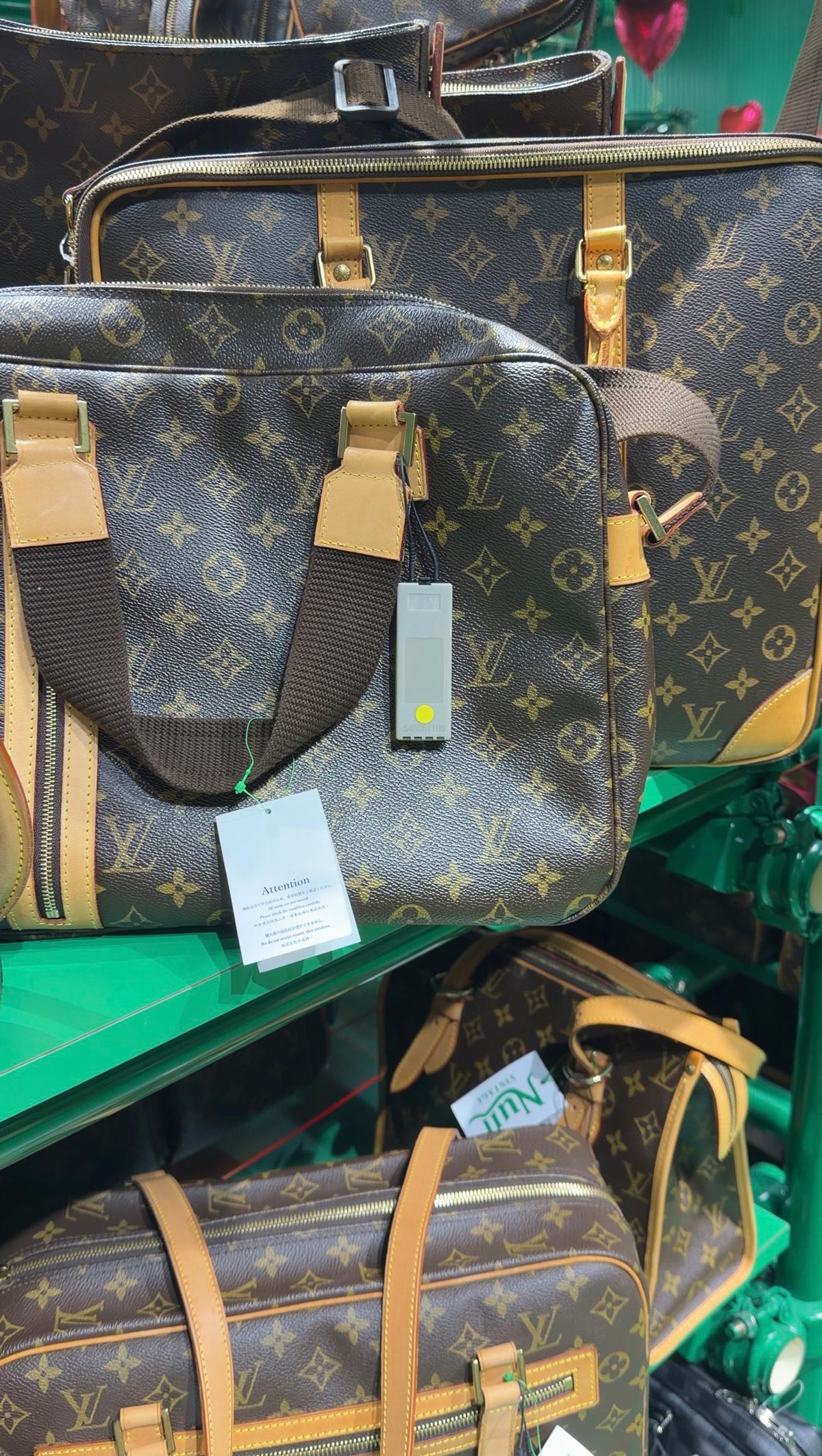
2nd-Hand Luxury Shopping in Tokyo & Osaka: Which City Has Better Deals?
If your goal is to search for the best deals, then start your shopping in Osaka which will usually have the better prices.
Our route was Tokyo to Kyoto, then Kyoto to Osaka, before heading back to Tokyo. We had about four hours to shop in Osaka, and we spent nearly all of it moving from one store to the next. Then, on the day we flew home from Tokyo, we had the morning and early afternoon free before heading to the airport. Most of the Cat Street stores opened around 11 a.m., so we had breakfast and spent the rest of our time shopping in Harajuku.
If you'll also be headed from Tokyo to Kyoto or Osaka, don't miss my guide on How To Book Your Shinkansen For The Best Seats!
.
Most Reputable 2nd-Hand Luxury Stores in Tokyo and Osaka
Here is a list of the popular and reputable second-hand luxury stores in Tokyo and Osaka. These brands have multiple locations across Japan and enough brand recognition that they are not going to risk their reputation on questionable merchandise. Japan’s resale market is built around trust, repeat business, and legal accountability, which is exactly why these larger chains are such good starting points for first-time shoppers.
- Bookoff Super Bazaar
- Mode Off
- 2nd Street
- Kindal
Japanese Handbag Condition Ratings Explained
When you shop for second-hand luxury in Japan, you will often see a condition rating attached to the bag. Not every store uses exactly the same system, but these are the most common ratings and what they generally mean.
- N (Brand New): Never used, essentially store-fresh. Some stores use this for truly new items.
- NS (Unused): Unused, but may show very slight signs of storage, display handling, or age.
- S (Like New): Very lightly used, with minimal visible wear.
- SA (Near Mint): Gently used, with only small scratches, faint marks, or other minor signs of wear.
- A (Excellent): Pre-owned, but still in very good condition overall, with light signs of use.
- AB (Good Condition): Noticeable but still moderate wear. Often a strong value if you do not mind minor flaws.
- B (Used Condition): Visible wear, scratches, marks, or aging, but still functional and wearable.
- C (Heavily Used): Obvious wear, damage, stains, or deterioration.
- D (Repair or Junk Condition): Significant damage or broken parts. Usually best for repair, restoration, or parts.
Which Japan Rating Is The Best Value?
If you are trying to find the best deals, AB and B are usually where the value lives.
Japan takes very good care of its luxury goods, so even a bag marked B can still look surprisingly good to an American buyer. In many cases, the flaws that push a bag down into a lower rating are the kinds of things that either are not especially noticeable once you are carrying it or can be improved without much effort.
It is also worth remembering that something as simple as a marked interior can lower a bag’s rating, even when the exterior still looks beautiful. Those are often the pieces where the pricing becomes much more interesting.
Quick tip: AB is often the sweet spot. The flaws are usually visible enough to lower the price, but not so serious that they ruin the piece.
Don't Only Rely On Rating
The rating system is helpful, but it should never be the only thing you rely on. Not every store displays the rating consistently, and even when they do, two bags with the same rating can look very different in person.
Always inspect the actual bag. Check the corners, straps, zipper, hardware, shape, and interior. A rating can point you in the right direction, but your eyes still have to do the final work.
My Trick for Finding the Best Deals on 2nd-Hand Luxury
Once you understand the ratings, the next step is learning where the real value tends to hide. In Japan, bags with visible flaws can be discounted by hundreds of dollars, even when those flaws are relatively easy to address.
That was exactly the case with my Louis Vuitton portfolio bag. It had a flaw I fixed in under two minutes. Instead of paying the usual going price of around $1,600 to $2,000, I paid just $650.
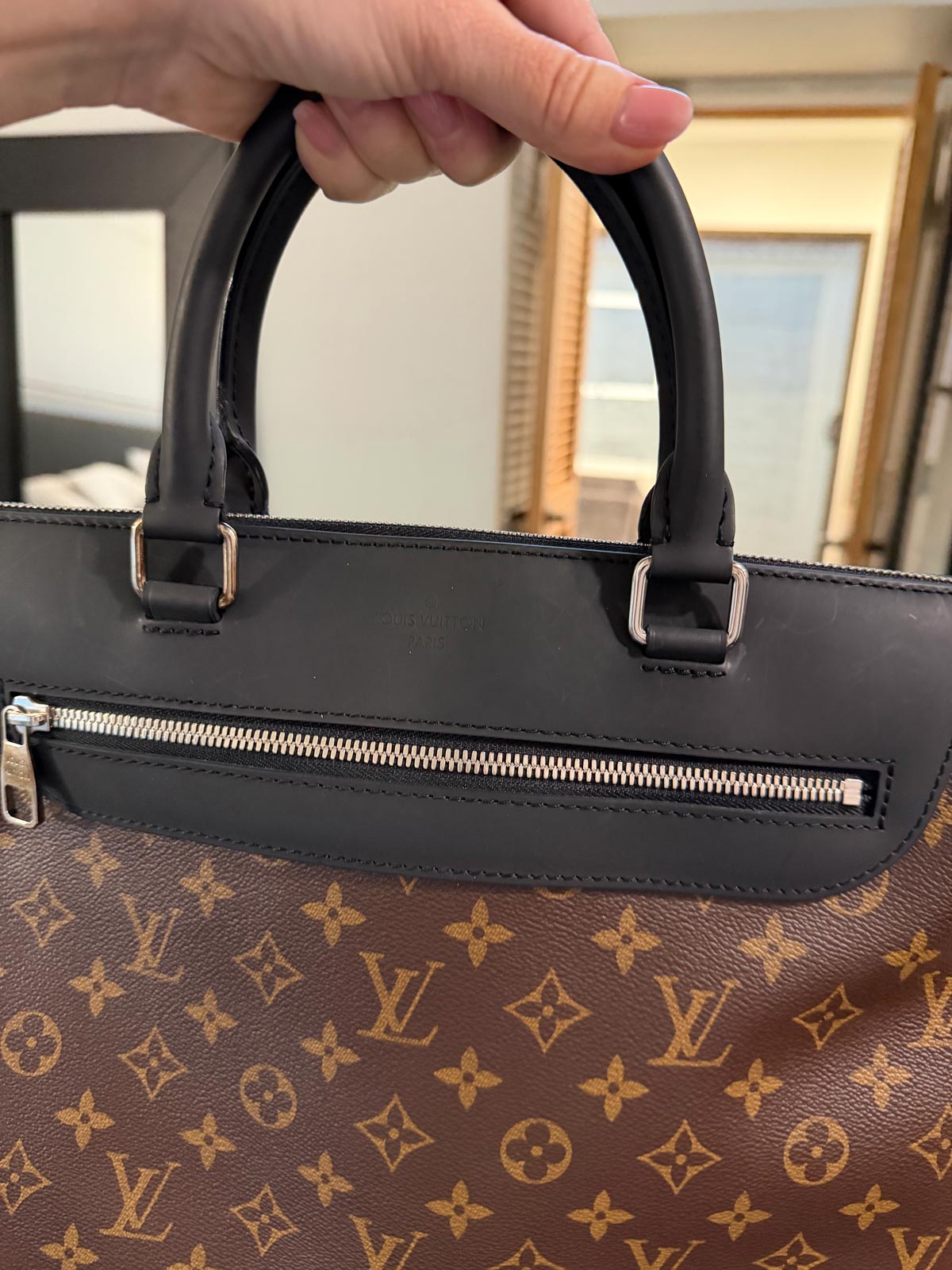
Here, you can see that the hardware on the left side is tarnished, and the right side looks brand new after being polished with a Q-tip.
Luxury Designer Handbag Flaws That Are Easy To Fix
Here are the types of flaws you want to look for that are easy to fix.
Tarnished Metal, that's not peeling
You can purchase metal polish on Amazon for a few dollars, and polish tarnished metal with a Q-tip. You can see the difference in the photo above.
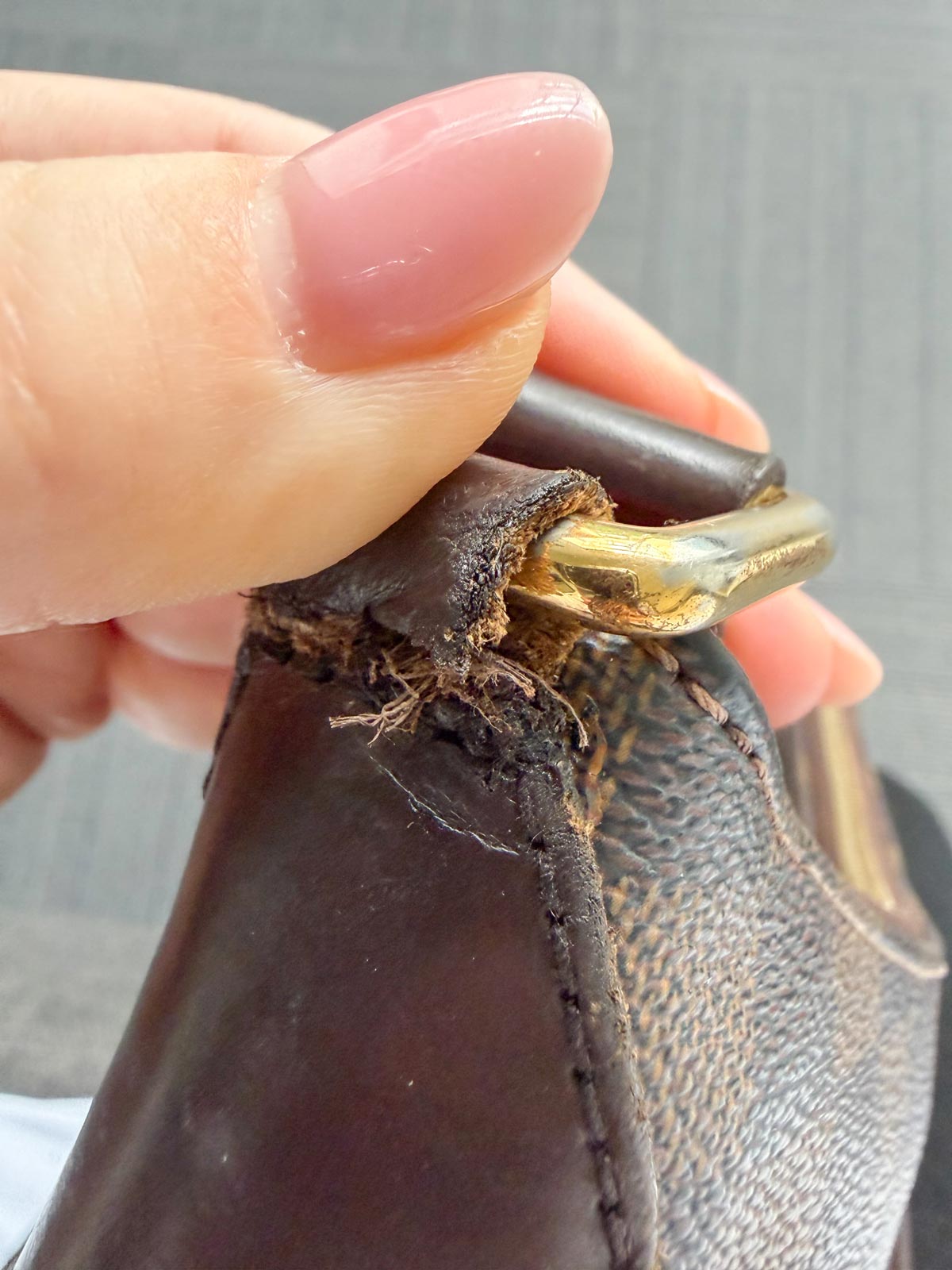
Loose Stitching and/or Torn Leather that attaches the straps:
This is one of the best flaws to find because it scares off a lot of buyers. A strap attachment that looks compromised makes a bag feel risky, even when the repair is fairly straightforward.
I bought a Louis Vuitton Bloomsbury Damier for only $450 because the strap attachment needed repair. The rest of the bag was in excellent condition. Louis Vuitton repaired it for $100, and once that was done, the bag looked pristine and was worth roughly $1,200 to $1,500.
Loose Zipper Stitching
If you see loose stitching on the zippers, this can be fixed by the handbag company or a shoe repair shop for a minimal fee of around $50.
Interior Stains
Interior stains and dirt are not glamorous, but they are often manageable. If the lining can be turned out, a careful cleaning with warm water and a microfiber cloth can make a significant difference. More importantly, interior flaws tend to matter far less in day-to-day use than exterior damage.
Very Light Scratches
Light scratches can almost always be buffed and polished to look as good as new.
Flaws You Should Avoid
Here are flaws that you should stay away from unless you can live with them. These flaws would be very expensive to fix.
- Torn Vinyl and Holes: Most luxury designer bags are made from one large piece of vinly and replacing the vinyl is $1000+. It also is the type of damage that gets worse over time. Stay away from holes, tears, and cracks unless you are ok with them.
- Water Marks: Water marks are difficult to remove and often require replacing the affected leather rather than simply cleaning it.
- Deep Scratches: Deep scratches cannot be removed with leather cleaner and polish.
- Bad Odors: Smoking is still popular in Japan, and cigarette smoke is one of the most difficult smells to remove.
What to Check Before You Buy
Here is a quick checklist on what to check before buying a 2nd-hand luxury bag or accessory
- Wear on corners and edges
- Straps, handles, and zipper
- Hardware condition
- Interior wear
- Odor
- Overall shape
- Stains on fabric
Tax-Free Shopping in Japan
One of the most notable reasons luxury shopping is so popular in Japan is the tax-free exemption. To encourage shopping in Japan, tourists are able to enjoy tax-free purchases on consumer goods. When it comes to luxury goods, this can be significant. If a bag is $2500, that can be $250 in taxes.
Eligibility Requirements
- You must present your passport or other required documents at the time of purchase. Some stores also accept a Visit Japan Web tax-free QR code for eligible residence statuses.
- Under the current system, purchases must generally total at least ¥5,000 before tax at the same store on the same day. For consumables, the current range is ¥5,000 to ¥500,000 before tax.
- Under the current system, consumables must be specially packaged and not opened in Japan. If they are consumed in Japan or opened before departure, you may have to pay the consumption tax.
- Tax-free goods must be taken out of Japan by you. They are not meant for business, resale, or transfer to someone else in Japan. If you do not have the goods with you at departure, you can be required to pay the tax.
2026 Tax Free Changes in Japan
As of now, travelers can still receive the tax break at the time of purchase, but from November 1, 2026, they will need to pay first and claim the refund later. Japan will switch from the current point-of-sale tax exemption to a refund-based system. That means shoppers will pay the 10% consumption tax at checkout first, then receive the refund after completing the required procedures before departure.
- Under the new system, customs must confirm that the goods are being taken out of Japan, and that confirmation must happen within 90 days of purchase.
- The distinction between general items and consumables will be abolished. Instead, there will be one minimum purchase threshold of ¥5,000 before tax, regardless of category.
- The current maximum purchase amount for consumables will be abolished under the new system.
- The current purpose-of-use requirements will be abolished under the new system.
- The current special packaging requirement for consumables will also be abolished under the new system.
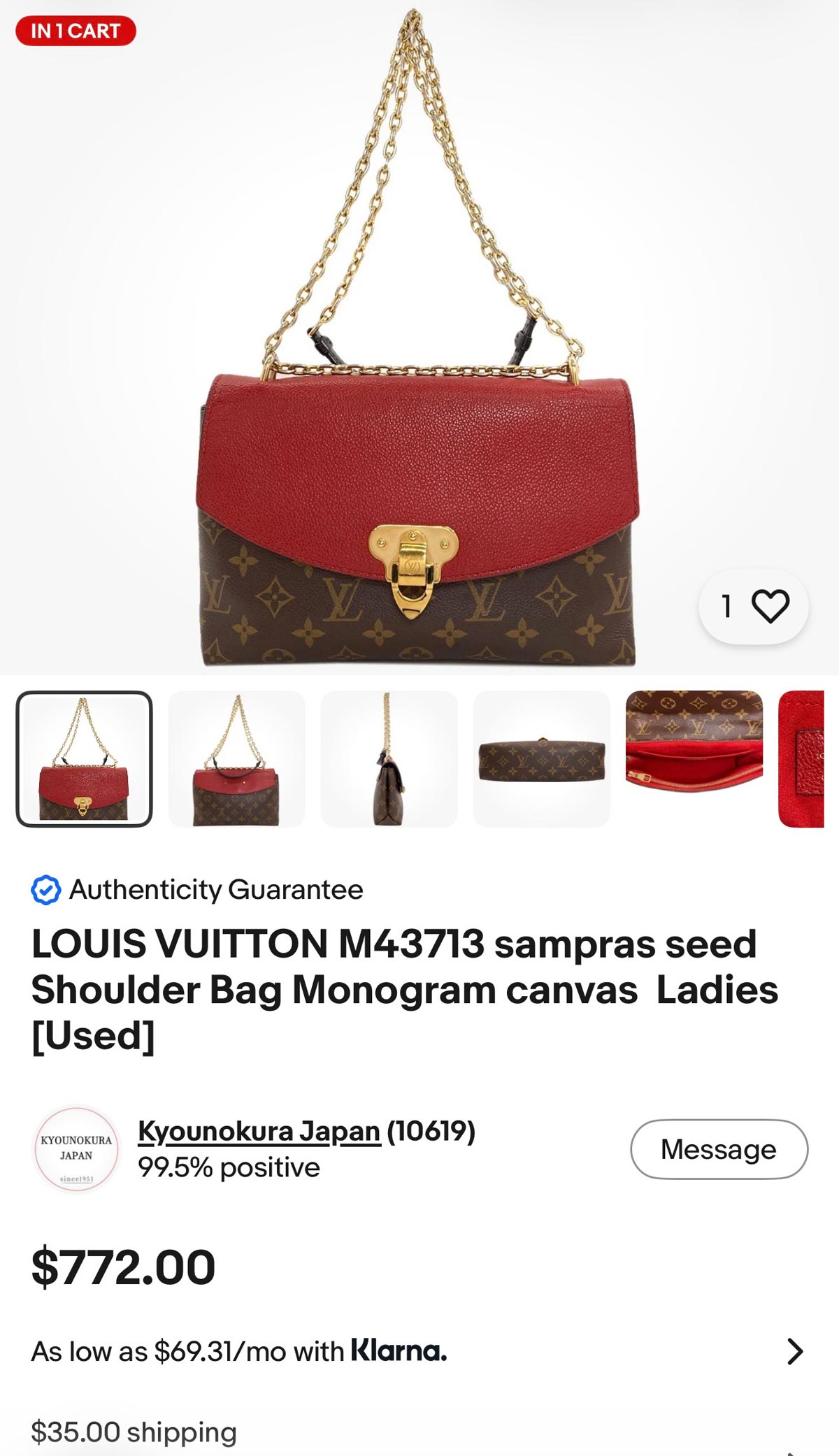
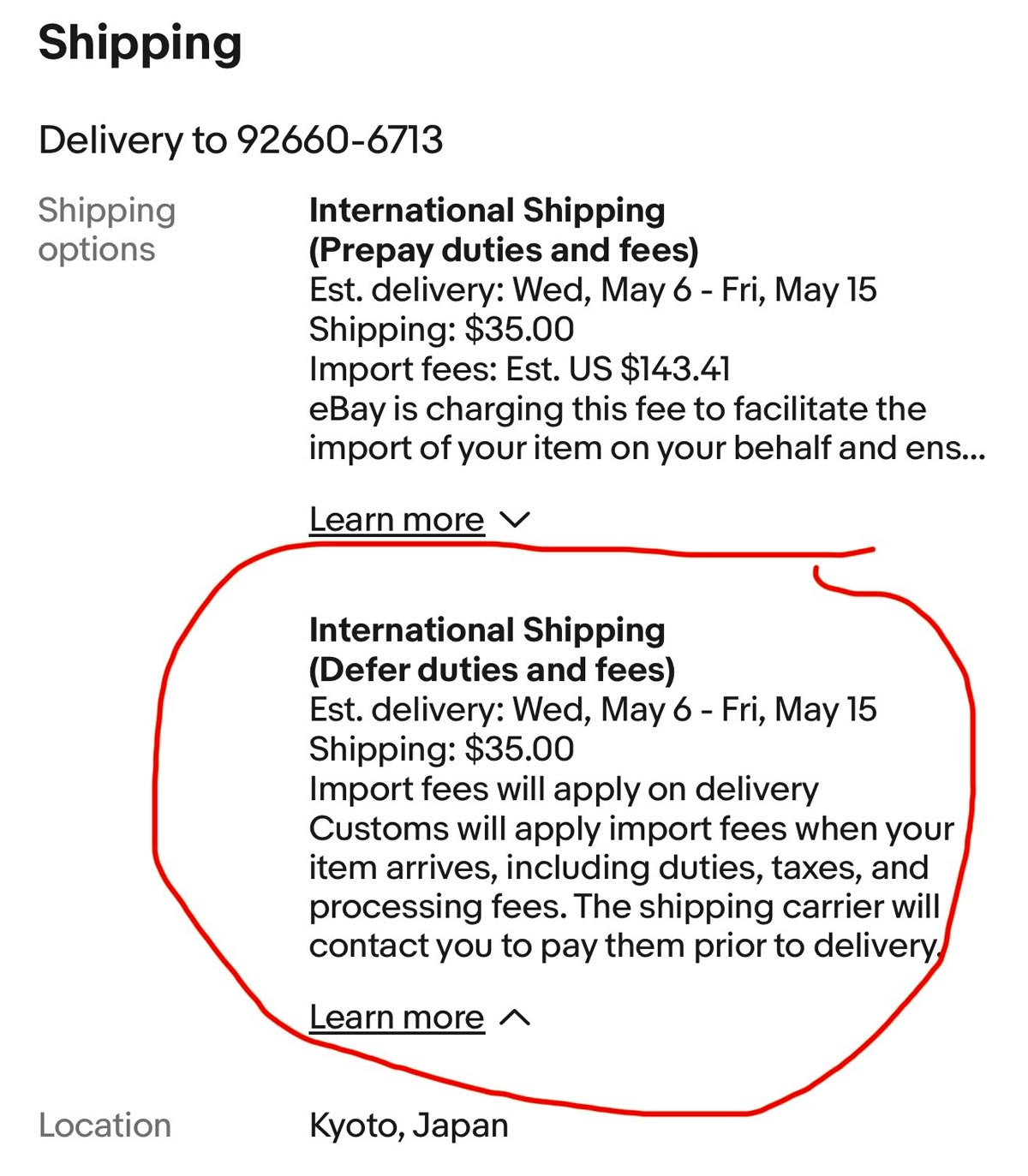
At first glance, this might seem like a great deal for a Louis Vuitton Bag, but upon further inspection, you'll see the International Shipping Fees also require import & duty fees to be paid before receiving your bag, often costing hundreds more.
Buying From Japanese Sellers on eBay vs. Buying in Japan
Many people don't know this, but eBay is full of sellers from Japan. They often have amazing prices that often are very similar to the prices in Japan. However, there are several extra fees to consider when buying on ebay that still make it much cheaper to purchase in Japan, even if the online price is the same.
Shipping costs, import fees, and taxes to factor in
- Import Fees: the most notable are the new import fees, which can be quite expensive. Items over $800 can pay an additional 15% - 24%, and there are some reports of people being charged import fees for purchases less than $800.
- Shipping Charges: shipping charges can vary and I've seen them start at around $35 and go up as high at $100. Some carriers even charge an extra brokerage fee for clearing customs on your behalf which can be another $50.
- Taxes: ebay automatically charges tax from 7% - 13% depending on your location
- Insurance: For high-ticket items, usually eBay shipping only covers the basic insurance provided by the shipping company. Purchasing insurance on your item can cost an extra $50-$100.
Why buying in Japan can be the better value
Buying luxury goods in Japan will almost always be a better value, and you'll also get to inspect the item in person, so there are no surprises. You'll also pay a reduced price because the US dollar is stronger than the yen by over 11%. When you factor in the dollar to yen conversion and all the savings below, this can amount to hundreds of dollars.
For example, I was looking at a Hermes watch on eBay from Japan that was around $2500. The tax, import fees, and shipping amounted to an additional $800. I ended up purchasing this watch in Japan, and while it was the same price, I saved significantly on all the extra fees.
- Tax-free savings
- No international shipping
- No Import Fees
- Stronger US Dollar to Yen
- No insurance needed
When buying online still makes sense
The only time buying online from Japanese sellers still makes sense is if the total shipping costs clearly state that the final price with shipping includes import fees, and you feel like the item is a great deal. Many eBay sellers have sales, and you can submit a best offer. I like to estimate what the tax would be and then submit a best offer price that deducts the tax.
The Best Luxury Items to Look For In Japan
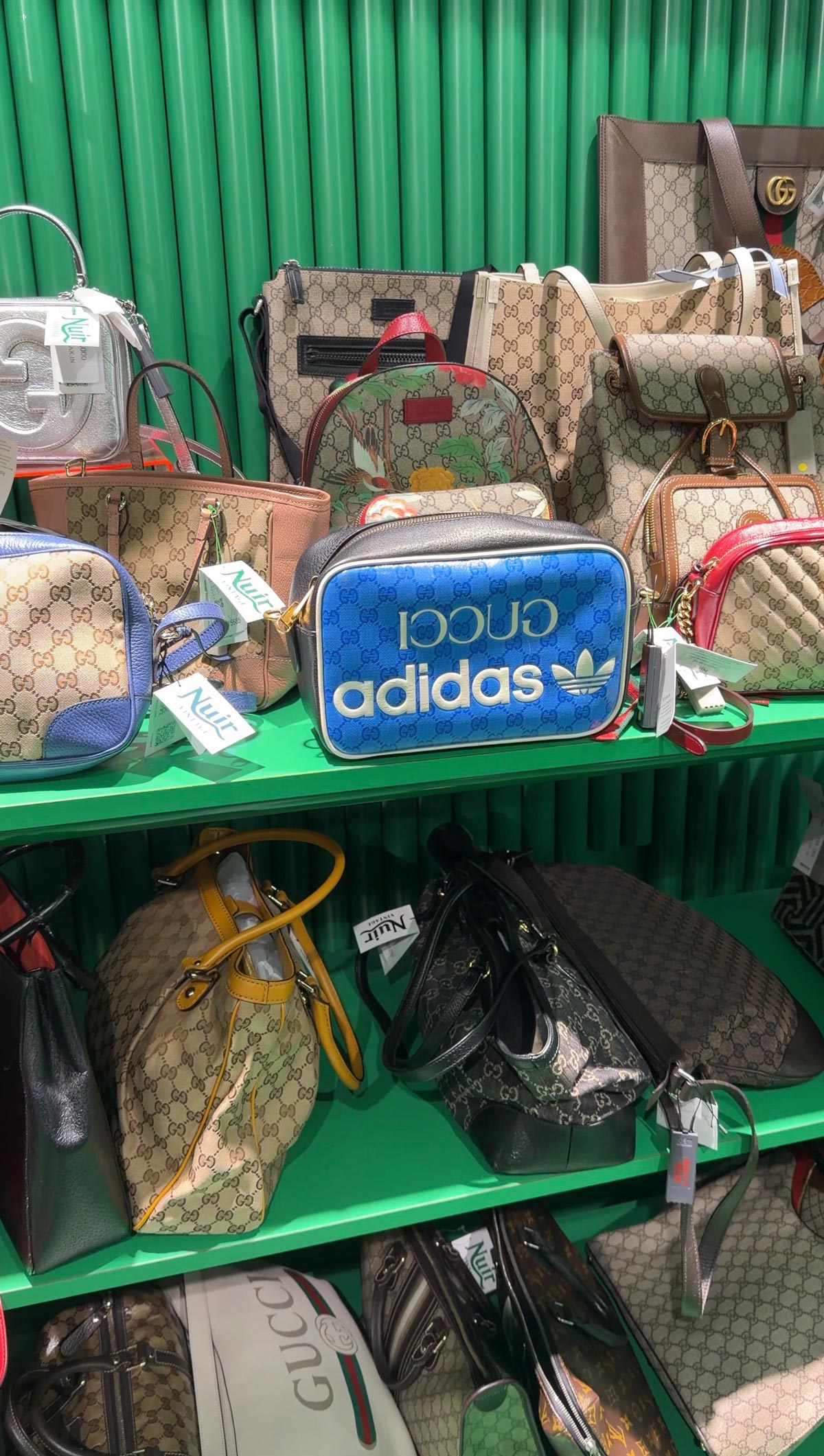
If you're going 2nd-hand luxury shopping in Tokyo and Osaka, here is exactly what I would look for if you want to find amazing deals.
- Designer Handbags: Gucci, Louis Vuitton, Prada, Christian Dior, Fendi, Celine
- Watches: Cartier, Hermes, Sieko
- Belts: All brands
- Burberry Jackets
- Scarves: Burberry, Fendi, Gucci
- Hats: Gucci
- Wallets: All brands
What I Would NOT Buy in Japan
While 2nd-hand luxury shopping in Tokyo and Osaka is amazing, not everything is a good deal. In fact, I found some items to be very overpriced, and they would actually be cheaper to purchase in a store like Fashionphile or on Ebay.
I would not buy Chanel or Hermès bags in Japan, and I would be careful with Rolex as well. Those categories often felt heavily marked up, and in some cases the pricing was dramatically higher than what I have seen in the U.S. resale market. The same 36mm Rolex I sold in the United States for $8,500, with a gold and steel band and diamond-accented face, was selling for $20,000 in Japan.
That does not mean you will never find value in those categories. It just means I would walk in with much more skepticism and research comparable pricing where you live.
The 2nd-Hand Luxury Bags and Accessories I Bought in Japan
Here are all the luxury goods I purchased in Japan, what I paid, exactly where I got them, what they retail for on the used luxury market in the US, and if they had any flaws
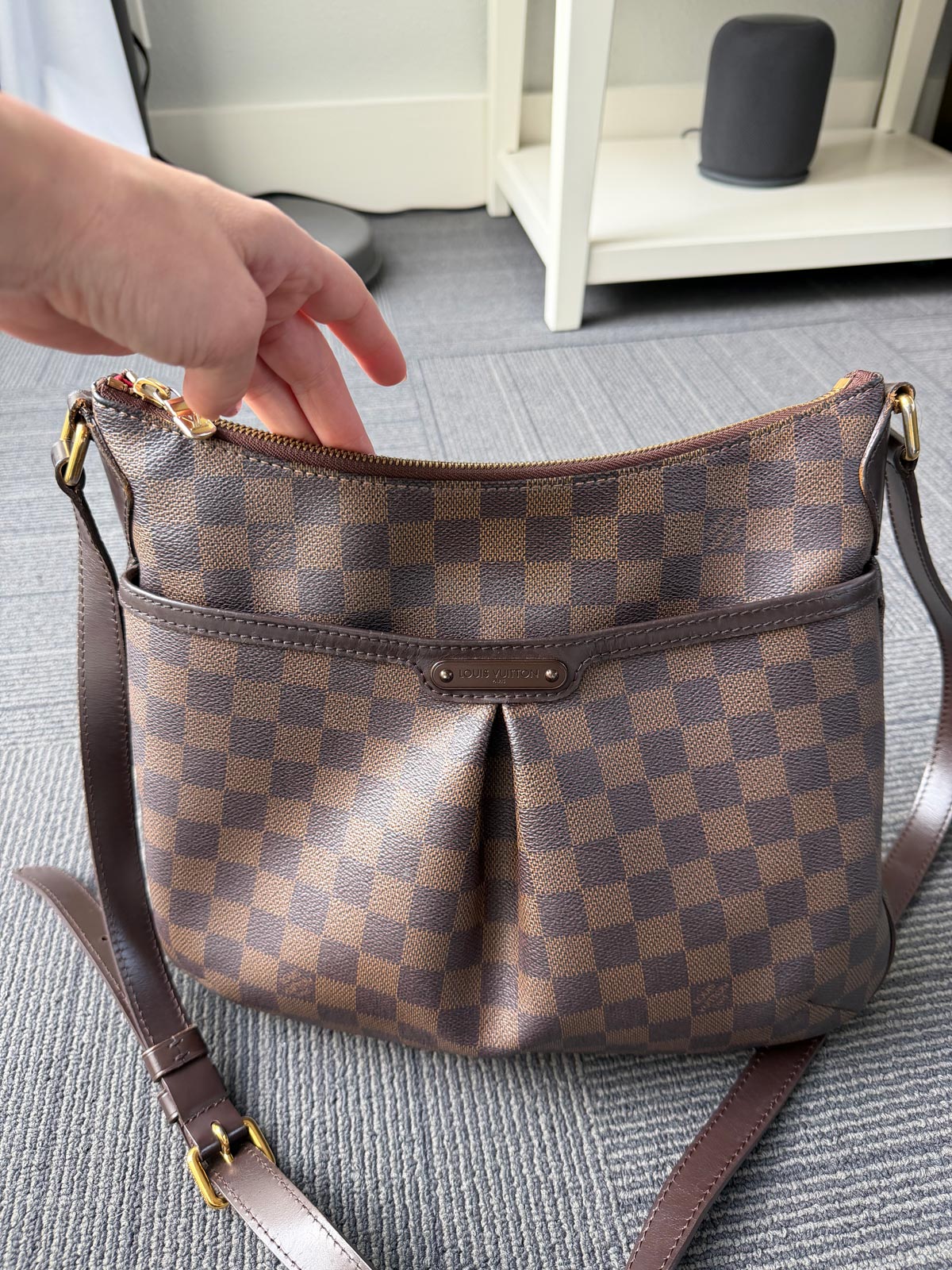
Louis Vuitton bag purchased in Tokyo
- Store: 2nd Street, Harajuku Cat Street
- Style: Louis Vuitton Bloomsburg Damier Crossbody Bag
- Condition: Excellent, accept for stitching and tear to leather that attaches strap
- Purchase Price: $450
- Why I bought it: The strap was an easy fix, repaired by Louis Vuitton for $100
- Total Price: $550
- 2nd-Hand Designer Price in US: $1200-$1600
- Savings: -$500-1k+
This was one of the best examples of what I mean by buying intelligently rather than buying perfectly. The flaw looked worse than it really was, which is exactly why the price had room to drop.
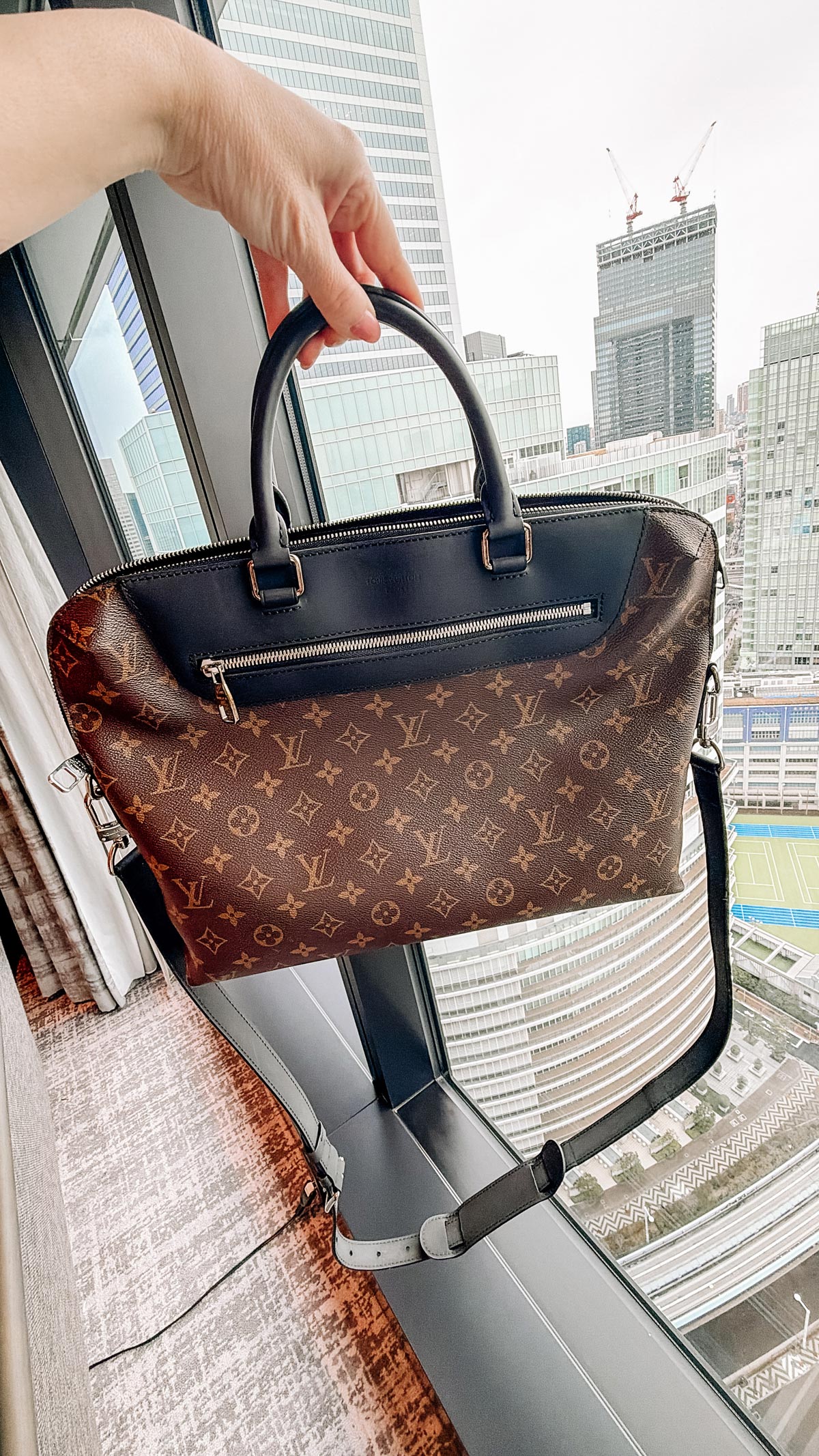
The Louis Vuitton bag purchased in Osaka
- Store: Kindal, Harajuku Cat Street
- Style: Louis Vuitton Porte-Documents Jour
- Condition: Excellent, accept for tarnishing of the metal near the handles on one side
- Purchase Price: $650
- Why I bought it: The tarnished metal was easily polished with a Q-tip and looks brand new now
- Total Price: $656
- 2nd-Hand Designer Price in US: $1300-$2300
- Savings: -$650-$1,650
This was another case where the flaw was mostly cosmetic. Once it was cleaned up, the bag looked far more expensive than what I paid for it.
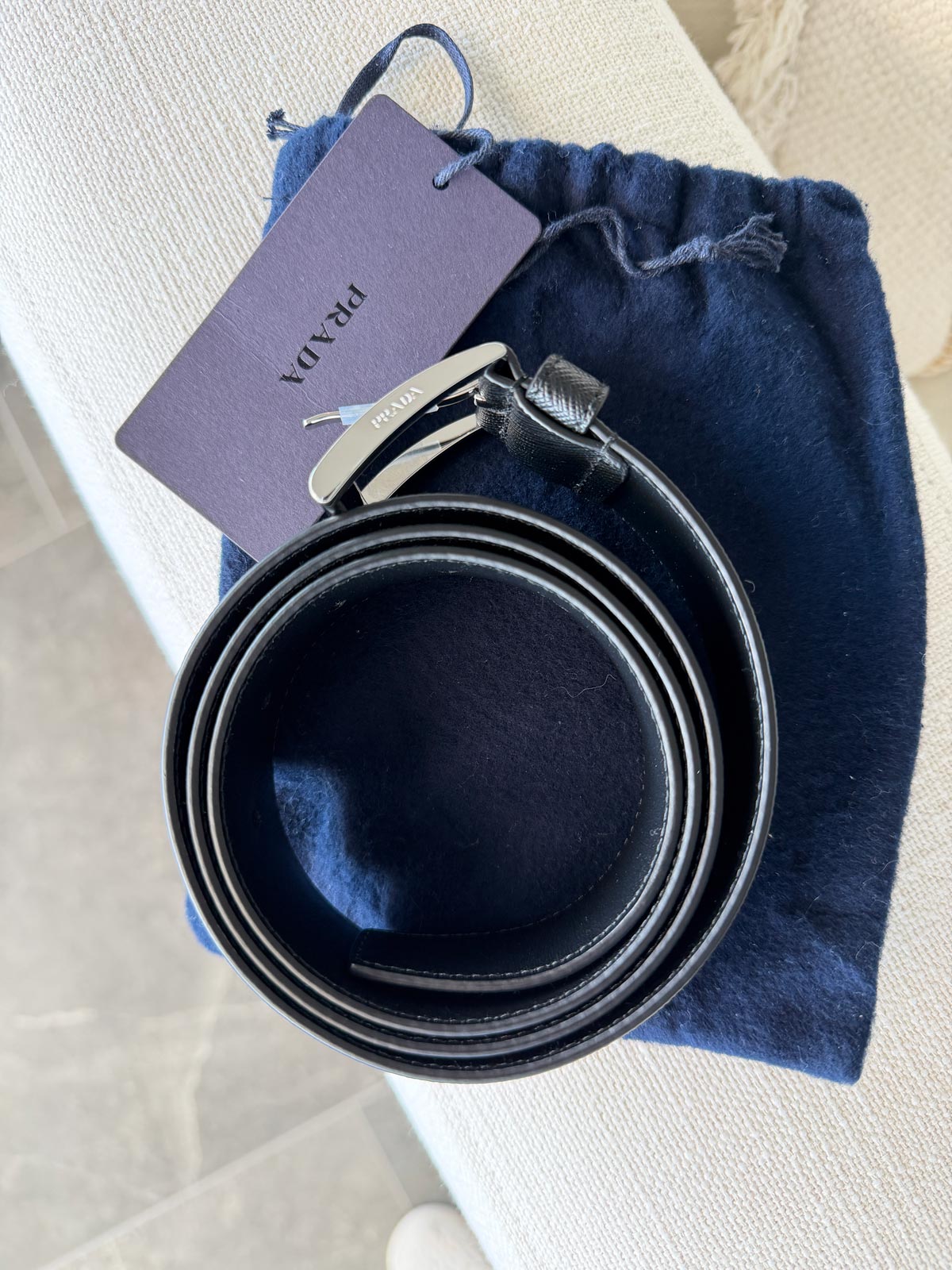
Prada Belt purchased in Tokyo
- Store: Kindal, Harajuku
- Style: Black Prada Belt
- Purchase Price: $180
- Why I bought it: Fiance needed a nice new belt
- Retail Price in US: $800
- Savings: -$600+
This is exactly why I would not focus only on bags. Smaller luxury accessories can offer some of the strongest value, especially when they are new or nearly new.
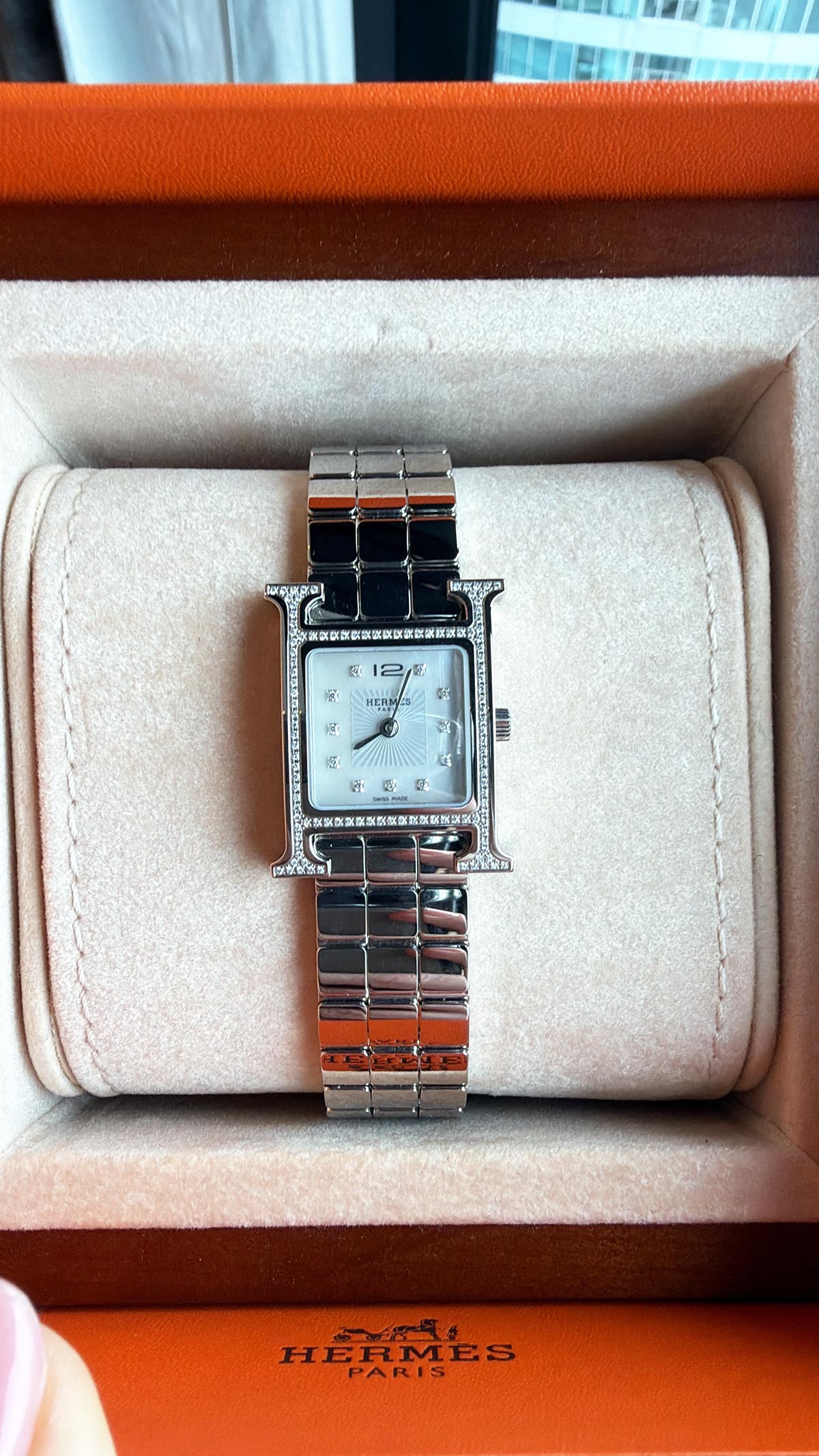
Hermès Watch in Osaka
- Store: Basel Watch & Jewelry, Osaka
- Style: Steel Hermes Watch with Diamond Case
- Condition: Used Excellent New Condition
- Purchase Price: $2400
- Listed Price: $3,000
- Why I bought it: I was able to negotiate the price down to what I the same watch listed for on Ebay. Buying in Japan meant I saved over $800 on taxes, shipping, and import fees.
- Retail Price in US: $7,525.00
- Savings: -$800
For me, this purchase was a reminder that price alone is not the whole equation. Once I factored in the real cost of buying from abroad, the in-person purchase made much more sense.
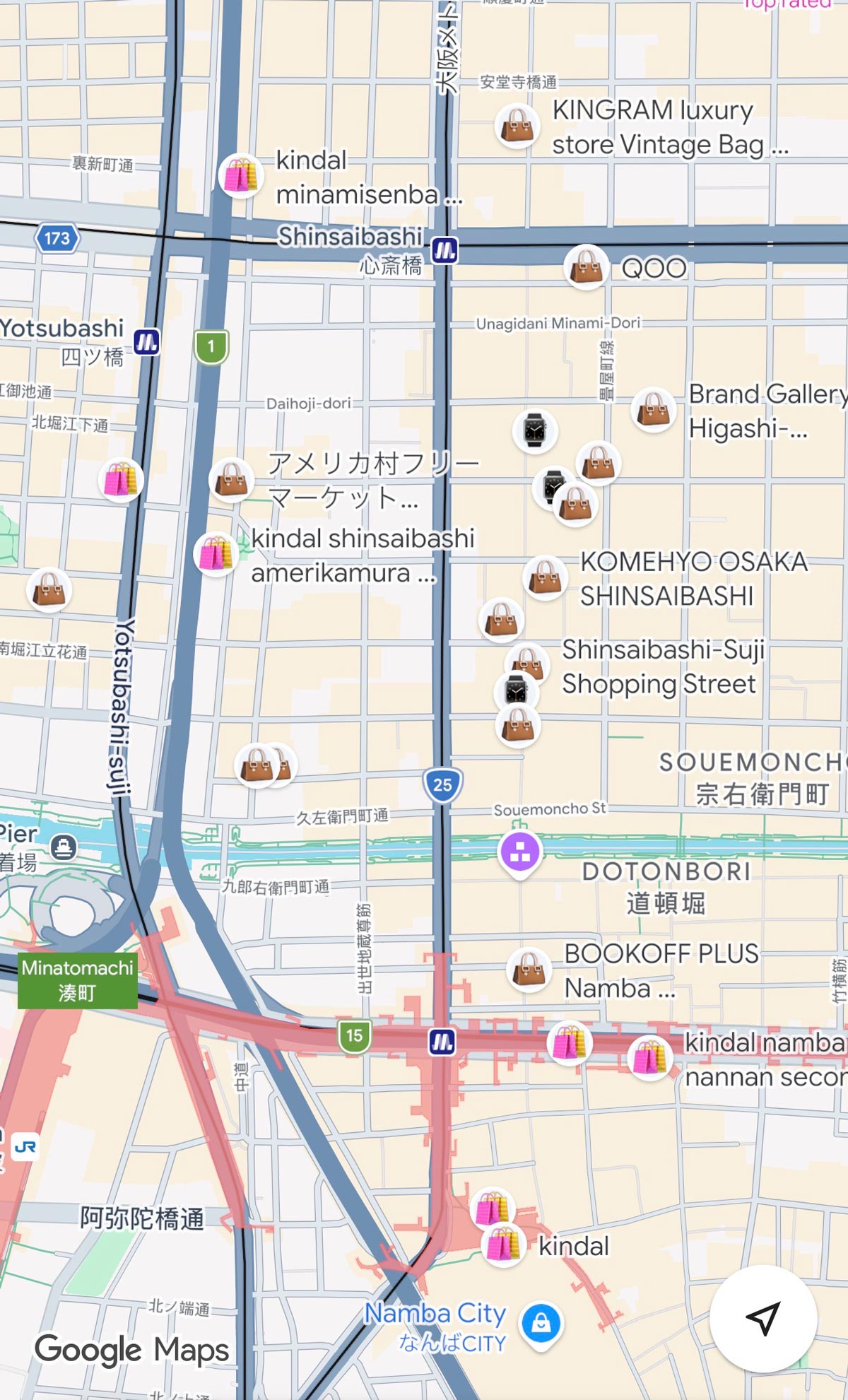
My 2nd-Hand Luxury Shopping Tokyo & Osaka Google Maps with Bookmarks
Now that you know exactly where to go and what to look for, here is my personal Tokyo & Osaka Google Maps for Shopping with all of my bookmarks. I hope you find this helpful during your trip to Japan and find some amazing deals on luxury goods.
More Japan Tips & Travel Guides
About The Author
I am the editor of Cuisine and Travel, where I share a candid look at the world’s best dining and luxury destinations. Whether I’m navigating the depachika food halls of Japan or reviewing specialty menus at sea, I do the research so my readers don’t have to. I focus on finding hidden gems and sharing the practical details needed to make travel planning easier, especially for those places that haven't gone viral on social media.
As an MSN Publisher and author of 100+ Meal Planning Ideas, my work and photography have been featured in Good Housekeeping, Modern Luxury, and Yahoo News. When I’m not on a ship or in wine country, I’m usually exploring the latest food and drink additions at Disneyland.
Learn more about me here in my Bio and follow all my cuisine & travel adventures on Instagram!
 Sondra Barker